
Evergreen vs Trending Content: What Actually Grows a Blog?
You sit down to write a new blog post and your brain immediately splits into two directions.
One side says:
“Write about the thing everyone’s talking about right now.”
The other says:
“Write something useful people will still search for years later.”
And honestly?
Both are valid.
That’s why understanding evergreen vs trending content matters so much if you want long-term blog growth.
Many beginner bloggers either:
· constantly chase trends
· or only write timeless guides
The smartest blogs combine both strategically.
This guide will help you understand:
· what evergreen content actually means
· how trending content works
· how each affects SEO
· and how to balance both effectively
If you're new to SEO, Google’s official SEO starter guide is genuinely worth bookmarking:
https://developers.google.com/search/docs/fundamentals/seo-starter-guide
What Is Evergreen Content?
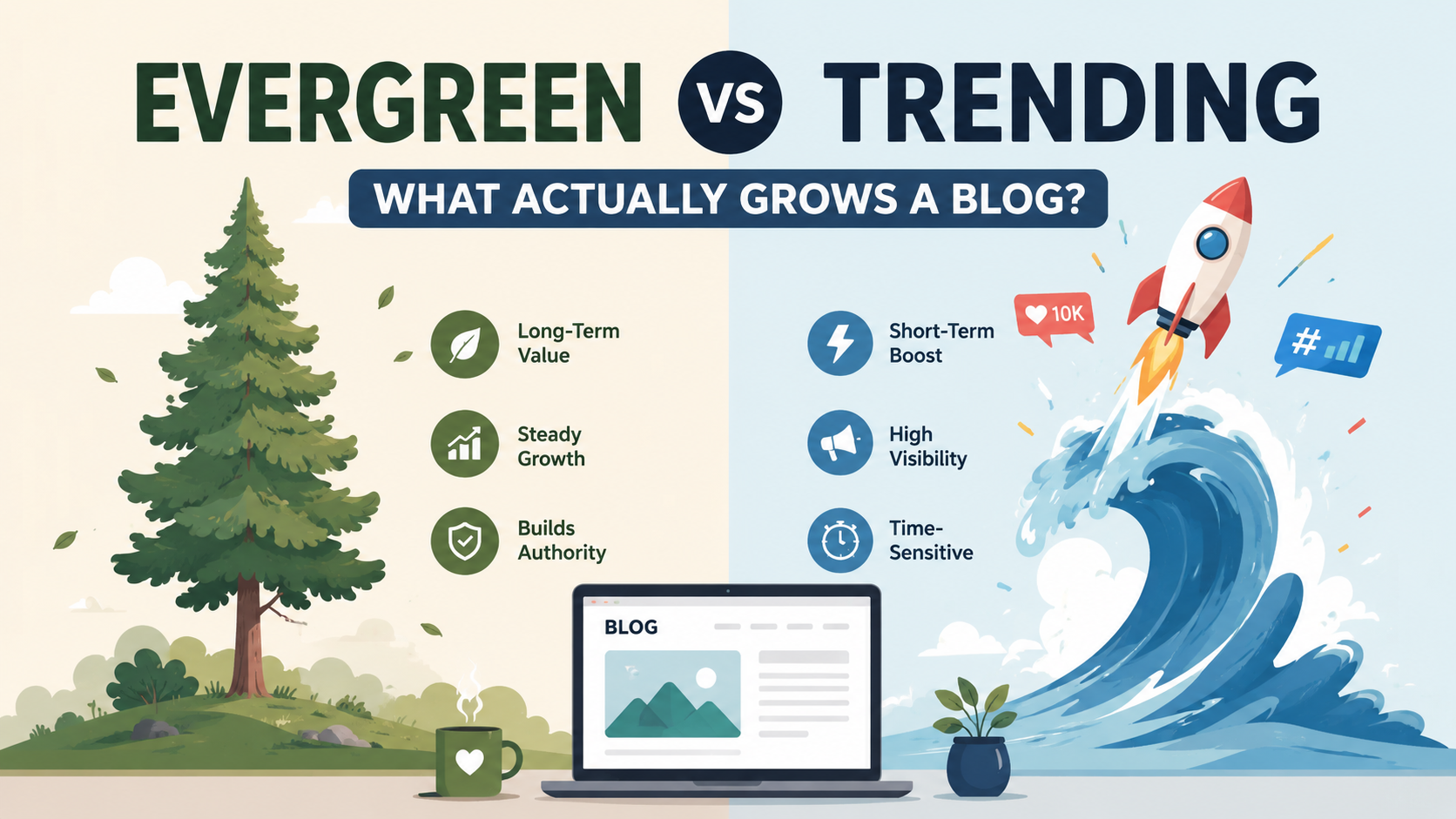
Think about a tree.
It keeps growing regardless of the season.
Evergreen content works the same way.
It stays useful and searchable for a long time. People continue searching for the topic month after month sometimes for years.
Examples include:
· How to start a blog
· What is SEO?
· Keyword research for beginners
· How to write a resume
· How to save money every month
Ask yourself:
Will people still search this next year?
If yes, the topic likely has evergreen potential.
Why Evergreen Content Performs Well
Evergreen content:
· builds consistent traffic
· earns backlinks naturally over time
· strengthens topical authority
· creates internal linking opportunities
This is why successful blogs rely heavily on evergreen foundations.
For example:
A guide titled:
“What Is SEO?”
can continue attracting visitors for years with occasional updates.
That’s long-term SEO value.
If you're still learning SEO structure, this on-page SEO guide can help you optimize articles properly.
🧷 https://climaxcreators.com/posts/on-page-seo-checklist-for-2026-optimize-before-you-publish

What Is Trending Content?
Now imagine a wave.
It rises quickly, gets attention fast, and then fades.
That’s trending content.
Trending content is tied to:
· current events
· platform updates
· viral discussions
· AI launches
· seasonal interest
· industry news
Examples:
· Instagram’s latest algorithm update
· New ChatGPT feature explained
· Best AI tools in 2026
· Google Search AI updates
Trending topics can bring sudden traffic spikes.
But the attention usually fades just as quickly.
Evergreen vs Trending Content: The Core Difference
Evergreen Content | Trending Content |
|---|---|
| Long lifespan | Short lifespan |
| Steady traffic growth | Fast traffic spikes |
| Better long-term SEO value | Better short-term visibility |
| Strong for internal linking | Strong for social sharing |
| Builds authority gradually | Captures current attention |
A simple way to think about it:
· Evergreen content = long-term investment
· Trending content = short-term momentum
Neither is “better.” They simply serve different goals.

Why Evergreen Content Is the Foundation of SEO
Most blogs don’t grow because of one viral post.
They grow because of consistent search traffic built over time.
Google favors content that:
· stays useful
· satisfies search intent
· earns engagement consistently
· gets updated when needed
That’s why evergreen content performs so well in search results.
A beginner guide written today can still rank years later if:
· the structure is clear
· the search intent is correct
· the content is optimized properly
· internal links support it
And before creating evergreen content, understanding search intent is essential because Google ranks pages that best match what users actually want.
🧷 https://climaxcreators.com/posts/search-intent-in-seo-match-content-to-what-users-want
Evergreen content also becomes your blog’s “pillar content.”
For example, if you already have posts about:
· keyword research
· search intent
· on-page SEO
· internal linking
those posts can support each other through smart internal linking.
Strong internal linking helps connect related posts into a complete SEO ecosystem.
🧷 https://climaxcreators.com/posts/internal-linking-in-seo-a-simple-guide-for-bloggers
Why Trending Content Still Matters
Trending content still plays an important role in blog growth.
Here’s where it helps most:
1. Fast Visibility
Publishing early on a rising topic can bring quick traffic from:
· Google Discover
· social media
· X/Twitter
· AI search platforms
2. Higher Share Potential
People naturally share topics that feel current and relevant.
Trending posts often spread faster than evergreen tutorials.
3. Builds Topical Relevance
Covering important updates in your niche shows readers your blog is active and informed.
4. Supports Evergreen Content
Trending content works best when it leads readers into your evergreen content library.
For example:
Someone reads:
“New ChatGPT SEO Feature Explained”
Inside that post, you link to:
“Beginner’s Guide to SEO”
Now temporary traffic becomes deeper engagement.
That’s strategic content planning.
Which Should Beginners Focus On?
If your blog is still small, start with evergreen content first.
Why?
Because evergreen content:
· compounds over time
· builds authority gradually
· ranks more consistently
· supports internal linking
· creates long-term stability
Trending content is usually harder for beginners because:
· competition moves quickly
· larger websites dominate breaking topics
· timing matters heavily
A beginner blog benefits more from:
✅ “How to Start SEO”
than
❌ “Google’s newest update explained”
Build the foundation first.
Then layer trends on top of it.

A Smart Content Balance
A healthy blogging strategy usually looks like:
70% Evergreen Content
30% Trending Content
This balance gives you:
· stable traffic growth
· occasional visibility spikes
· stronger authority
· better long-term SEO health
Example:
Evergreen | Trending |
|---|---|
| What is SEO? | Google’s newest SEO update |
| How to start blogging | Best AI tools this month |
| Keyword research guide | Latest ChatGPT feature |
One builds consistency.
The other creates momentum.
Together, they strengthen your overall content strategy.
Real-Life Example
Imagine two bloggers starting at the same time.
Blogger A
Publishes only trending topics like:
· viral AI tools
· new Instagram updates
· social media hacks
Traffic spikes quickly.
But after a few weeks, most posts stop performing.
Blogger B
Focuses mainly on evergreen guides like:
· SEO basics
· blogging for beginners
· keyword research
· internal linking
Traffic grows slower initially.
But six months later, those posts are still ranking and bringing visitors consistently.
That’s the compounding effect of evergreen SEO.
How to Decide What to Write Next
Before choosing a topic, ask yourself:
Will people still search this in a year?
If yes → it likely has evergreen value.
Is this topic tied to recent news or updates?
If yes → it’s probably trending content.
Does this fit my niche properly?
If not, skip it.
Can I internally link this to existing posts?
If yes, it likely strengthens your content ecosystem.
If you're struggling to find evergreen topics, learning keyword research properly makes a huge difference.
🧷https://climaxcreators.com/posts/a-beginners-guide-to-finding-low-competition-keywords
You can also use tools like:
· Google Trends
https://trends.google.com/
· AnswerThePublic
https://answerthepublic.com/
to validate content ideas.

Common Mistakes Bloggers Make
Only Chasing Trends
This creates unstable traffic.
The moment you stop publishing, growth slows immediately.
Ignoring Trends Completely
Some trends can bring valuable visibility and new readers.
Ignoring them entirely means missing opportunities.
Publishing Random Topics
Your content should stay connected to your niche.
Random trending posts rarely help long-term authority.
Never Updating Evergreen Posts
Refreshing old evergreen articles can significantly improve rankings.
Update:
· examples
· screenshots
· statistics
· links
· formatting
every few months.
A Simple Content Strategy That Works
Here’s a practical beginner-friendly approach:
Step 1
Publish strong evergreen content consistently.
Step 2
Add trending posts when they genuinely fit your niche.
Step 3
Link trending posts back to evergreen guides.
Step 4
Update evergreen posts regularly.
Step 5
Stay consistent.
That consistency matters far more than publishing every single day.

Final Thoughts
The debate around evergreen vs trending content isn’t about choosing one permanently.
It’s about understanding what each type of content is designed to do.
Evergreen content creates stability.
Trending content creates momentum.
The strongest blogs use both intentionally.
If you’re still building your blog:
Start with evergreen.
Build authority gradually.
Create interconnected content.
Then use trends to accelerate growth when relevant opportunities appear.
Because sustainable blogging isn’t built on random viral moments.
It’s built on useful content that continues helping people long after it’s published.
And if your content still isn't ranking even after optimization, this breakdown explains the most common reasons beginner blogs struggle in Google.
🧷 https://climaxcreators.com/posts/why-your-blog-is-not-ranking-on-google-and-how-to-fix-it
Frequently Asked Questions
What is evergreen content in SEO?
Evergreen content is content that stays useful and searchable over a long period of time, helping generate consistent traffic from search engines.
Is trending content good for SEO?
Yes. Trending content can bring fast visibility, social shares, and short-term traffic spikes when published at the right time.
Which is better for beginners: evergreen or trending content?
Evergreen content is usually better for beginners because it builds stable traffic and long-term authority.
How do I balance evergreen and trending content?
A common strategy is 70% evergreen content and 30% trending content, using evergreen as the foundation and trends for additional visibility.