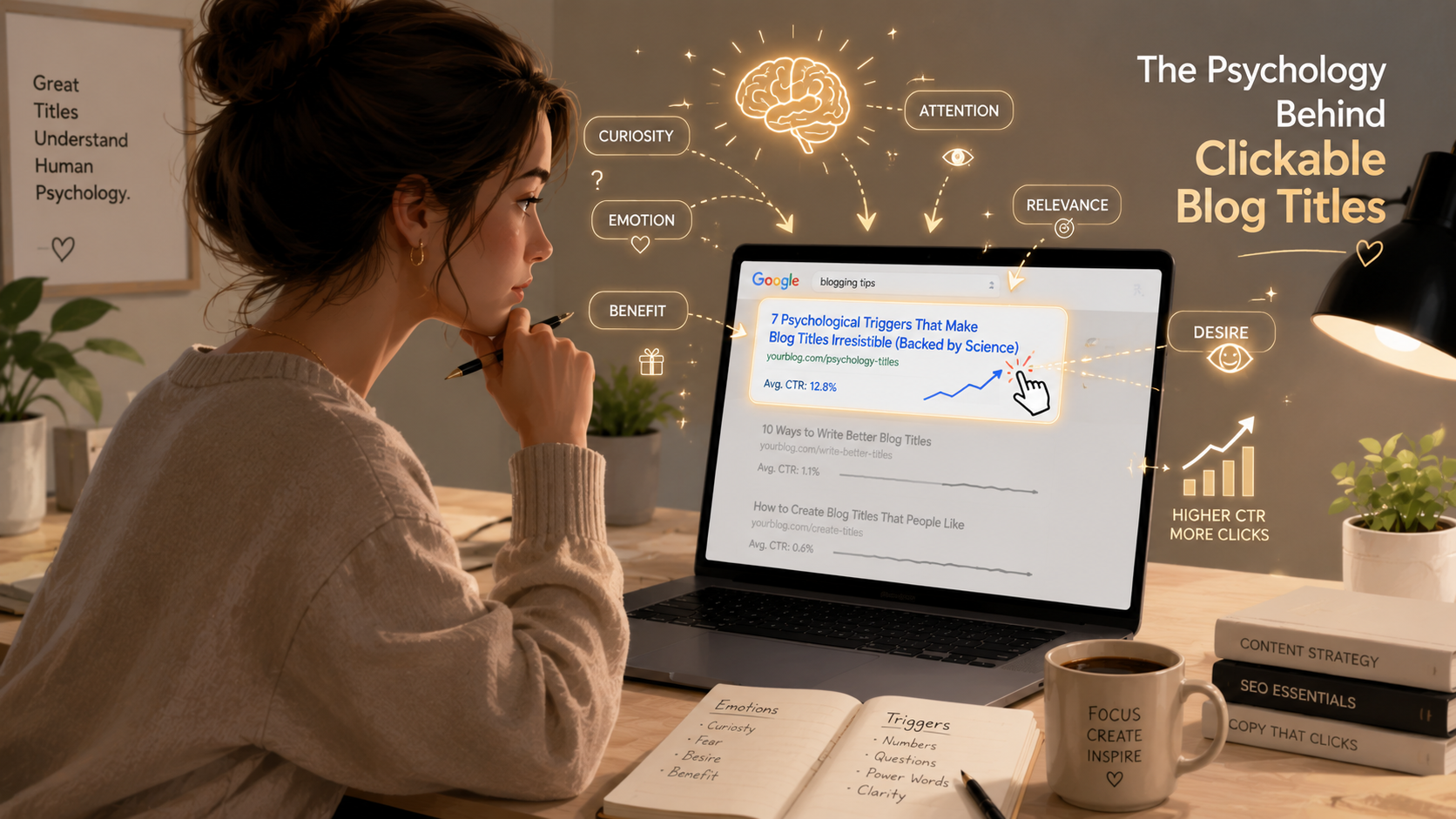
The Psychology Behind Titles People Actually Click
You spend hours writing a blog post.
You research, draft, edit, and finally hit publish.
Google starts showing your article in search results.
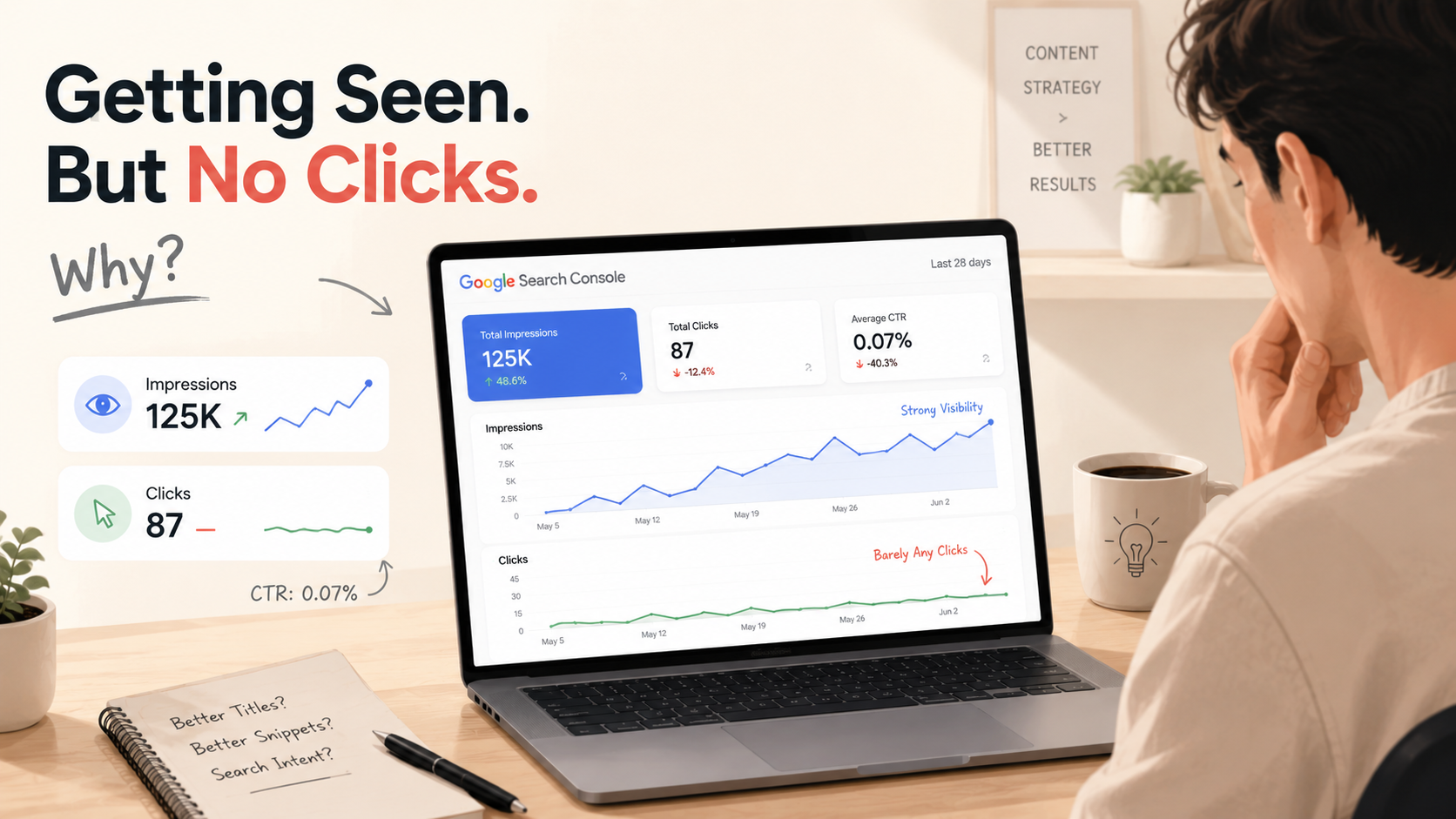
And still… nobody clicks.
That usually means one thing: your clickable blog titles are not strong enough to make people stop scrolling and choose your content over everything else on the page.
The post sits there. Impressions climb. Clicks barely move.
Here's the uncomfortable truth: people don't click articles. They click titles.
SEO gets your post seen. Psychology is what gets it opened. And most bloggers even experienced ones spend far more time writing the article than learning how to write titles that actually attract attention.
That ends today.
Why Titles Matter More Than Most Bloggers Think
When someone searches on Google, they don't read carefully. They scan.
In about two seconds, they're already deciding which result feels worth their time. Your title is your entire pitch in that moment. It's the first impression, the promise, and the reason to click all in one line.
Ranking on page one gets you seen. But a weak title can still make you invisible.
Think about the difference between these two:
- SEO Tips
- 7 SEO Mistakes Quietly Killing Your Blog Traffic
The first one is forgettable. The second makes you think:
"That might be me."
One triggers nothing. The other creates curiosity, concern, and relevance.
That's not luck. That's psychology.
The Psychology Principles Behind Clickable Titles
There are a handful of mental triggers that consistently make people more likely to click. Once you understand them, you'll start seeing them everywhere.
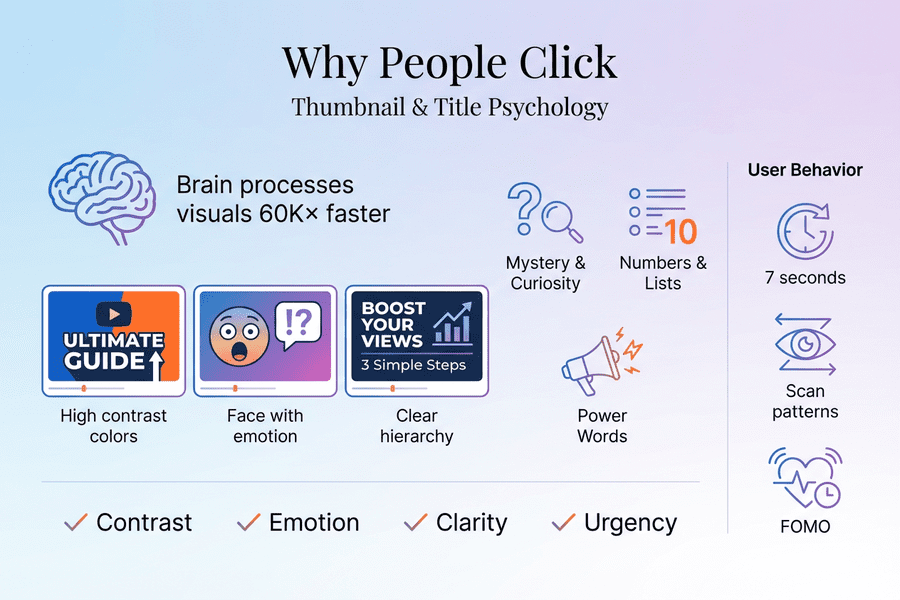
Curiosity: The Information Gap
The brain dislikes unanswered questions.
When a title creates a gap between what someone knows and what they want to know, clicking feels natural.
Examples:
- Why Most Blogs Never Grow
- The SEO Mistake Almost Every Beginner Makes
- Why Your Content Gets Traffic But No Conversions
Each title hints at missing information the reader wants to uncover.
Good curiosity doesn't confuse people. It simply opens a loop they want closed.
Specificity: The Trust Signal
Specific titles feel more believable.
Compare these:
- How to Improve Your CTR
- How I Increased CTR by 37% in 30 Days
The second one feels grounded in real experience because it includes:
- a measurable result
- a timeframe
- a clear outcome
Specificity reduces uncertainty.
Numbers, percentages, and concrete outcomes instantly make titles feel stronger.
Emotional Relevance: The Mirror Effect
People click titles that reflect what they're already feeling.
Frustration. Confusion. Ambition. Self-doubt.
That's why titles like these work:
- Why Your Blog Posts Get Impressions But No Clicks
- The Real Reason Your SEO Isn't Working Yet
- Why Good Content Still Doesn't Rank on Google
These titles mirror emotional problems readers are already experiencing.
When readers feel understood, they pay attention.
Clarity Over Cleverness
A lot of writers try too hard to sound unique.
But unclear titles rarely get clicked.
For example:
- The Digital Awakening
- Breaking the Algorithmic Barrier
These may sound creative, but most readers have no idea what they actually mean.
Now compare them to:
- Why Your Blog Posts Aren't Ranking on Google
- How to Write Blog Titles That Improve CTR
Clear wins.
Readers instantly understand:
- the topic
- the benefit
- and whether the article is relevant to them
Cleverness only works when clarity comes first.
Self-Identification: The "That's Me" Moment
The strongest titles often make readers quietly recognize themselves.
Examples:
- SEO Mistakes Beginner Bloggers Make
- Why New Bloggers Struggle to Get Traffic
- The Content Writing Habits That Hurt Small Blogs
These work because readers immediately think:
"That's probably about me."
That moment of self-recognition is powerful. It makes the content feel personal.

Why Clickbait Eventually Fails
Some titles promise everything and deliver nothing.
They might earn clicks temporarily, but readers catch on quickly.
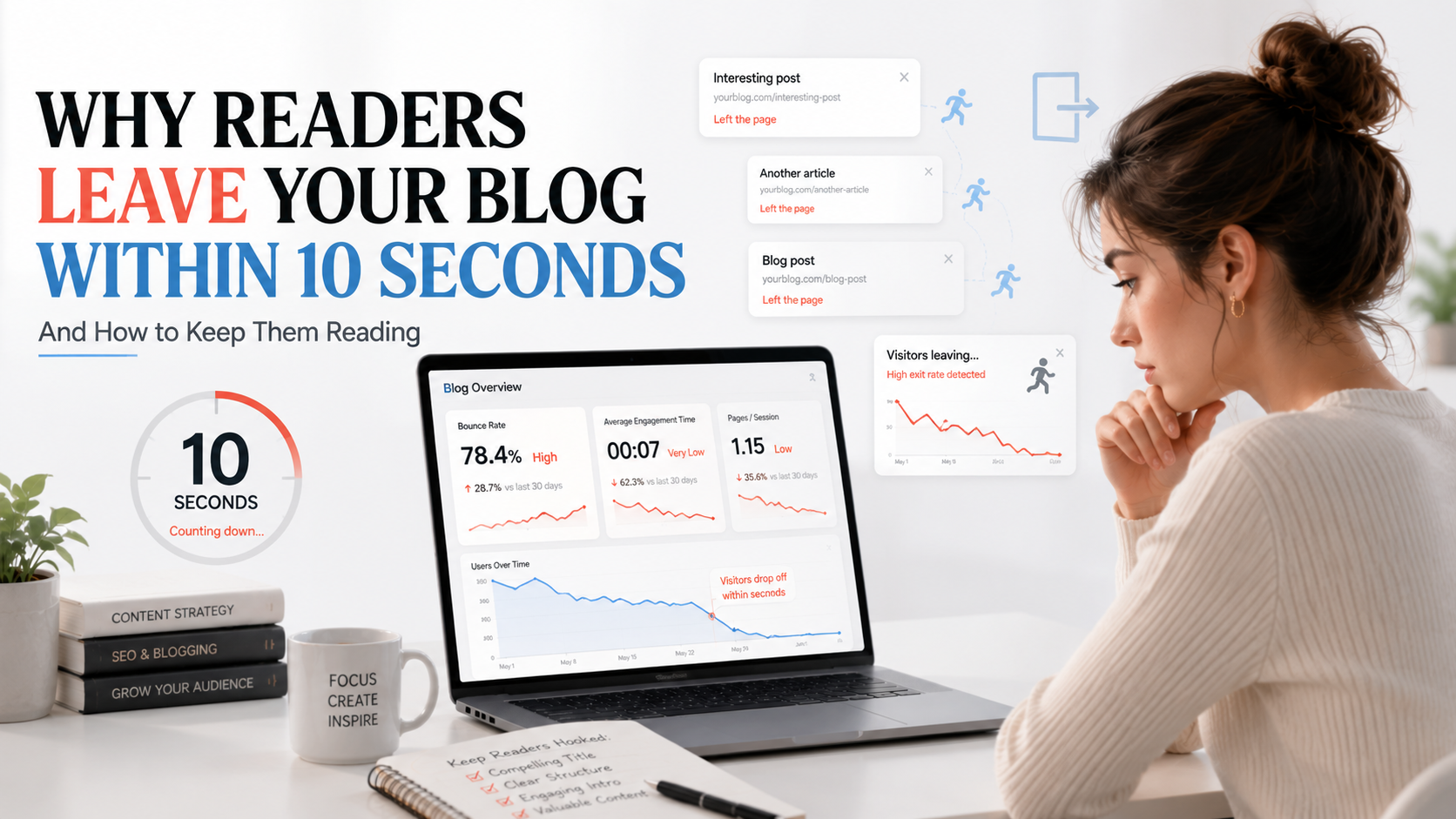
High bounce rates, low trust, and disappointment follow.
Examples of weak clickbait:
- This SEO Trick Changes EVERYTHING
- The Secret Google Doesn't Want You to Know
- You Won't Believe What Happened to My Blog
These titles create curiosity without clarity.
The goal isn't manipulation. It's earned curiosity.
A good title creates interest in something the article genuinely delivers on. That's what builds long-term trust and audience loyalty.
Curiosity is powerful when it's honest.
How Google Responds to CTR (Indirectly)
There's ongoing debate about whether click-through rate is a direct ranking factor. But here's what we do know:
When people consistently choose your result over others and stay on the page, Google gets signals that your content matched what searchers wanted.
That's important.
A strong title paired with genuinely useful content creates alignment between:
- what the reader expected
- and what the page delivered
And that's exactly what search engines want to reward.
Google's SEO Starter Guide:
https://developers.google.com/search/docs/fundamentals/seo-starter-guide

Real Examples: Weak vs. Strong Titles
Sometimes it's easier to see the difference directly.
Weak | Stronger |
|---|---|
| SEO Tips for Beginners | 9 Beginner SEO Mistakes That Stop Blogs From Ranking |
| Email Marketing Guide | How to Build an Email List When Nobody Knows Your Blog Exists |
| Content Writing Tips | Why Good Content Doesn't Always Get Traffic (And What Actually Helps) |
| Blog Post Ideas | 12 Blog Post Ideas That Actually Rank on Google |
| Improve Website Traffic | Why Your Website Gets Visitors But No Leads |
| Blogging Advice | The Blogging Habits Quietly Killing Your Growth |
The stronger titles don't just describe the topic.
They communicate:
- the problem
- the stakes
- or the specific value the reader will get
That's what earns clicks.
A Simple Formula for Better Titles
You don't need to reinvent headlines every time.
A simple framework helps:
[Specific Outcome] + [Curiosity or Problem] + [Audience]
Examples:
- Why Beginner Bloggers Struggle With SEO (And How to Fix It)
- How to Write Blog Titles That Actually Improve CTR
- The SEO Mistakes Quietly Hurting Your Rankings
- Why Most New Blogs Never Reach Page One
- How Small Bloggers Can Compete in SEO
This isn't a rigid template. It's a way to pressure-test your titles.
Ask yourself:
- Is the outcome clear?
- Is there curiosity?
- Does it feel relevant to the right audience?
If yes, you're probably on the right track.
Common Headline Mistakes to Avoid
Even strong writers make these mistakes.
Keyword Stuffing
Titles overloaded with keywords feel robotic and unnatural.
Bad:
- Best SEO Titles SEO Blog SEO Tips
Better:
- How to Write SEO Titles That Actually Get Clicks
Vagueness
If readers can't immediately understand the value, they'll skip the result.
Vague:
- Thoughts on Blogging
Clear:
- Why Most Bloggers Struggle to Grow Traffic
Overly Long Titles
Long headlines often get cut off in search results.
Aim for roughly 50–65 characters when possible.
You can test title length here:
https://www.highervisibility.com/seo/tools/serp-snippet-optimizer/
Fake Urgency
Titles like:
- You MUST Read This NOW
- This Changes EVERYTHING
usually feel manipulative instead of persuasive.
Trying Too Hard to Sound Smart
Complex language and industry jargon often reduce clarity instead of increasing authority.
Simple language almost always performs better.
Misleading Titles
If the content doesn't match the promise, trust disappears quickly.
Good titles attract clicks.
Great titles attract the right clicks.
Quick Title Checklist
Before publishing, ask yourself:
- Would I actually click this?
- Is the value immediately clear?
- Is it specific enough to feel credible?
- Does it sound natural?
- Does it create curiosity without misleading?
- Does it match search intent?
You can also study CTR performance using Google Search Console:
https://search.google.com/search-console/about
If you hesitate on multiple answers, the title probably needs another draft.
Resources You Should Read Next
If you're trying to improve SEO and click-through rates, these topics connect directly with title psychology:
- https://climaxcreators.com/posts/why-your-blog-posts-get-impressions-but-no-clicks-in-seo
- https://climaxcreators.com/posts/search-intent-in-seo-match-content-to-what-users-want
- https://climaxcreators.com/posts/why-your-blog-is-not-ranking-on-google-and-how-to-fix-it
- https://climaxcreators.com/posts/internal-linking-in-seo-a-simple-guide-for-bloggers
Conclusion
SEO might get your article seen.
But psychology is what gets people to stop scrolling and actually click.
Titles aren't decoration. They're positioning. They're the reason someone chooses your content over the eight other results beside it.
Small improvements to your titles can completely change your traffic not because you manipulated people, but because you communicated value more clearly.
The post was always worth reading.
Now your title says so too.
In SEO, visibility gets you seen.
But psychology gets you chosen.
Frequently Asked Questions
How do you write titles people click?
Use clarity, specificity, emotional relevance, and genuine curiosity while making sure the title accurately reflects your content and matches search intent.
Do titles affect SEO?
Yes. Titles influence click-through rate, search visibility, and how users interact with your content over time.
What makes a title clickable?
A strong title creates curiosity, promises clear value, and feels personally relevant to the reader.
Are clickbait titles bad for SEO?
Misleading titles can hurt trust, increase bounce rates, and damage your brand long-term. The goal is honest curiosity titles that create interest and then genuinely deliver on the promise.