
Search Intent in SEO: How to Match Content to What People Want
Why Good Content Still Doesn’t Rank
Riya, a student blogger, wrote an article titled “Digital Marketing Guide.”
She explained everything SEO, ads, social media in one post.
But when someone searches “digital marketing”, they are usually:
- looking for a course
- or a beginner explanation
- or career info
Her post tried to do everything, so it satisfied no clear intent.
Later, she rewrote one article targeting:
👉 “what is digital marketing for beginners”
Within 2 months, it started ranking same topic, better intent match.
You spent hours working on a blog post. You did your research. You wrote it well. You even added headings and images. You hit publish. Then you waited.
Nothing happened.
This sounds familiar to a lot of bloggers. The truth is, your content might actually be good. But Google does not just rank content it ranks the right content for what someone is searching for.
That “right content” is called search intent in SEO. When you understand search intent, the way you write content will completely change.
What is Search Intent in SEO?
Search intent in SEO is the reason behind a user’s search query what they actually want when they type something into Google.
Think about this: if someone searches for “laptop”, are they learning about laptops, comparing options, or ready to buy one?
Same keyword. Different intentions.
Google’s job is to figure this out and show the most relevant results. It tracks what users click, how long they stay, and whether they return to search again. Over time, it learns exactly what type of content satisfies a query.
👉 Keywords tell you what people search.
👉 Search intent tells you why they search.
That “why” is what determines rankings.
If you want to understand how Google evaluates content, you can check their SEO guide here:
https://developers.google.com/search/docs/fundamentals/seo-starter-guide
For a beginner-friendly explanation of SEO concepts, this guide is also helpful:
https://moz.com/beginners-guide-to-seo

The 4 Types of Search Intent
Understanding these four types will help you create the right kind of content.
1. Informational Intent
A Class 12 student searches:
👉 “what is SEO in simple words”
They don’t want tools or services.
They want a simple explanation.
If you show them a “Top SEO Tools” article they’ll leave instantly.
The user wants to learn something.
Examples:
- how does SEO work
- what is keyword research
Content type:
Blog posts, guides, tutorials
2. Navigational Intent
The user wants to visit a specific website.
Examples:
- YouTube login
- Facebook homepage
Content type:
Not useful for bloggers you can’t compete here.
3. Commercial Intent
Someone searches:
👉 “best phones under 20000 in India”
They are not learning they are comparing.
A blog that lists:
- Top 5 phones
- Specs
- Pros & cons
👉 will rank better than a general “mobile buying guide.”
The user is researching before making a purchase.
Examples:
- best SEO tools
- laptops under 50000
Content type:
Listicles, comparisons, reviews
4. Transactional Intent
The user is ready to take action.
Examples:
- buy iPhone 15
- subscribe Netflix plan
Content type:
Landing pages, product pages
Why Search Intent Matters for SEO
Here’s what most beginners miss:
Google tracks what users do after clicking your result.
If someone lands on your page and leaves quickly, Google assumes your content did not satisfy their intent. Your rankings drop.
When your content matches intent:
- Users stay longer
- They engage more
- They trust your content
Google rewards that.
👉 Matching intent is not just SEO it’s respecting your reader’s time.
How to Identify Search Intent
Here’s the simple process successful bloggers follow before writing:
Step 1: Search Your Keyword on Google
Look at the search results this shows what Google prefers.
Step 2: Analyze the Top Results
Check:
- Content format
- Length
- Structure
Step 3: Look for Patterns
If most results are listicles, that’s the format you should follow.
Step 4: Check “People Also Ask”
These questions reveal:
- What users care about
- What your content should include
Step 5: Match Your Content Format
Don’t fight Google’s format align with it.
EXAMPLE Let’s say you want to write about “Instagram growth.”
You search it on Google and see:
- “How to grow on Instagram in 2026”
- “10 Instagram growth tips”
- YouTube videos
👉 This tells you:
- Intent = Informational
- Format = Tips/List
So instead of writing a theory article, you write:
👉 “10 Proven Instagram Growth Tips for Beginners”
That’s how you align with intent.
Matching Content to Search Intent
Keyword: “how to start a blog”
Intent: Informational
Write: Step-by-step guide
Keyword: “SEO tools”
Intent: Commercial
Write: Comparison list
Keyword: “buy domain name”
Intent: Transactional
Write: Landing page, not a blog post
A Mistake vs the Right Approach
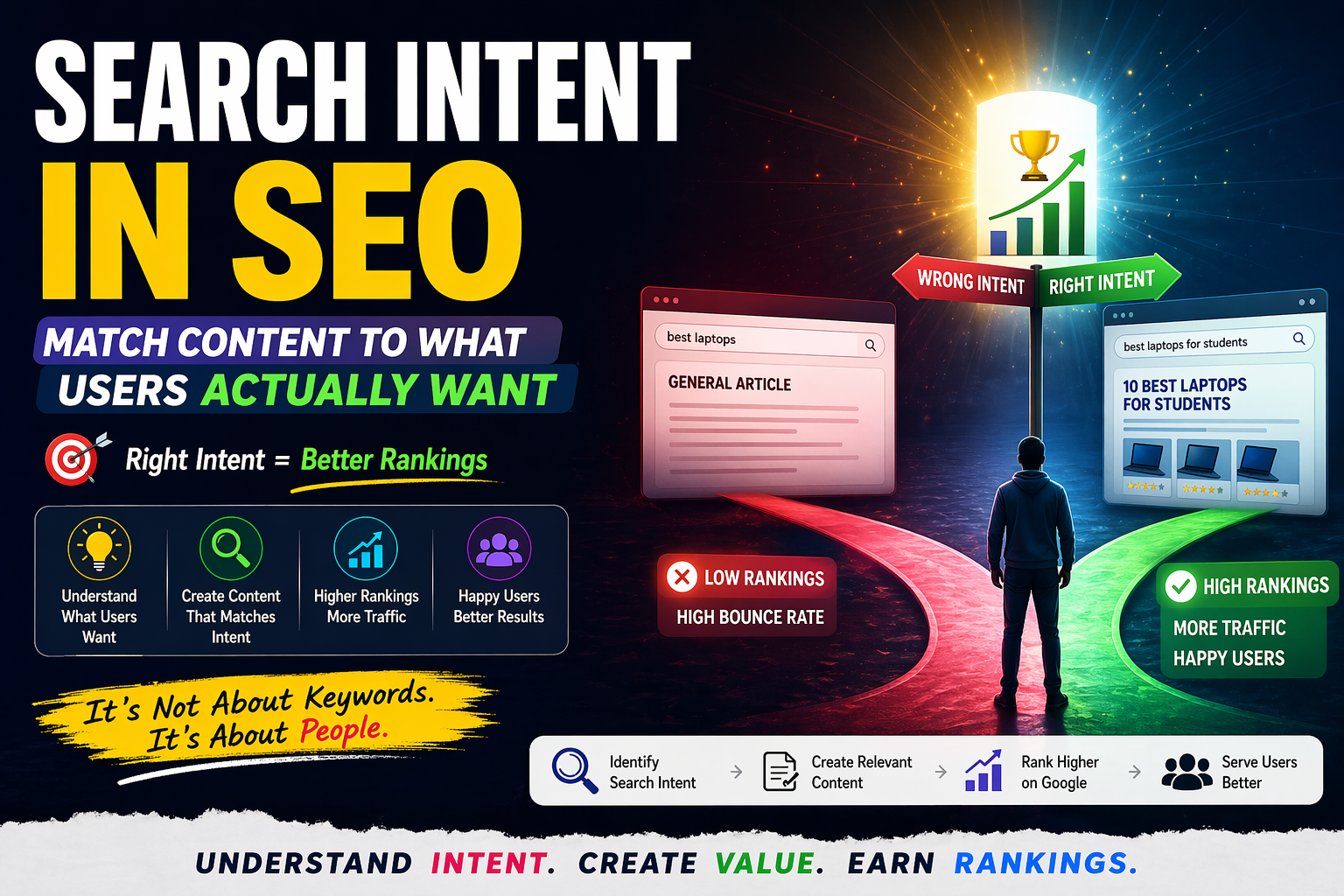
Keyword: best laptops for students
❌ Wrong approach:
A general article explaining laptop features
✅ Right approach:
“10 Best Laptops for Students” with comparisons, pros/cons, and pricing
The second one ranks because it matches search intent.
Common Search Intent Mistakes
- Not checking Google before writing
- Using the wrong content format
- Mixing multiple intents in one post
- Assuming instead of researching
- Creating multiple posts for the same keyword
Avoid these, and your ranking chances improve significantly.
Search Intent + Keyword Research
Keyword research tells you what people search.
Search intent tells you why they search.
Together, they form the foundation of SEO.
If you're learning SEO step by step, combining keyword research with search intent can significantly improve your rankings.
You can explore tools like:
- Google Keyword Planner:
https://ads.google.com/home/tools/keyword-planner/ - Google Search Console:
https://search.google.com/search-console/about - AnswerThePublic:
https://answerthepublic.com/ - Ubersuggest:
https://neilpatel.com/ubersuggest/

Final Thoughts
SEO is not about keywords or technical tricks.
At its core, it’s about understanding people.
When you align your content with search intent in SEO, you’re not trying to game Google — you’re simply giving users what they came for.
Before writing your next article, ask:
“What does someone actually want when they search this?”
Answer that. Rankings follow.
Frequently Asked Questions
What is search intent in SEO?
Search intent in SEO is the reason behind a user’s search query. It helps Google show the most relevant results.
How do I identify search intent in SEO?
Search your keyword on Google. Analyze the results and look at format, structure, and content type.
Why is search intent important?
Because Google ranks content that satisfies users. If your content does not match intent, it will not rank.
Can one keyword have multiple intents?
Yes. Some keywords have mixed intent. Google usually prioritizes one follow what appears in search results.