Why Your Blog Posts Get Impressions But No Clicks
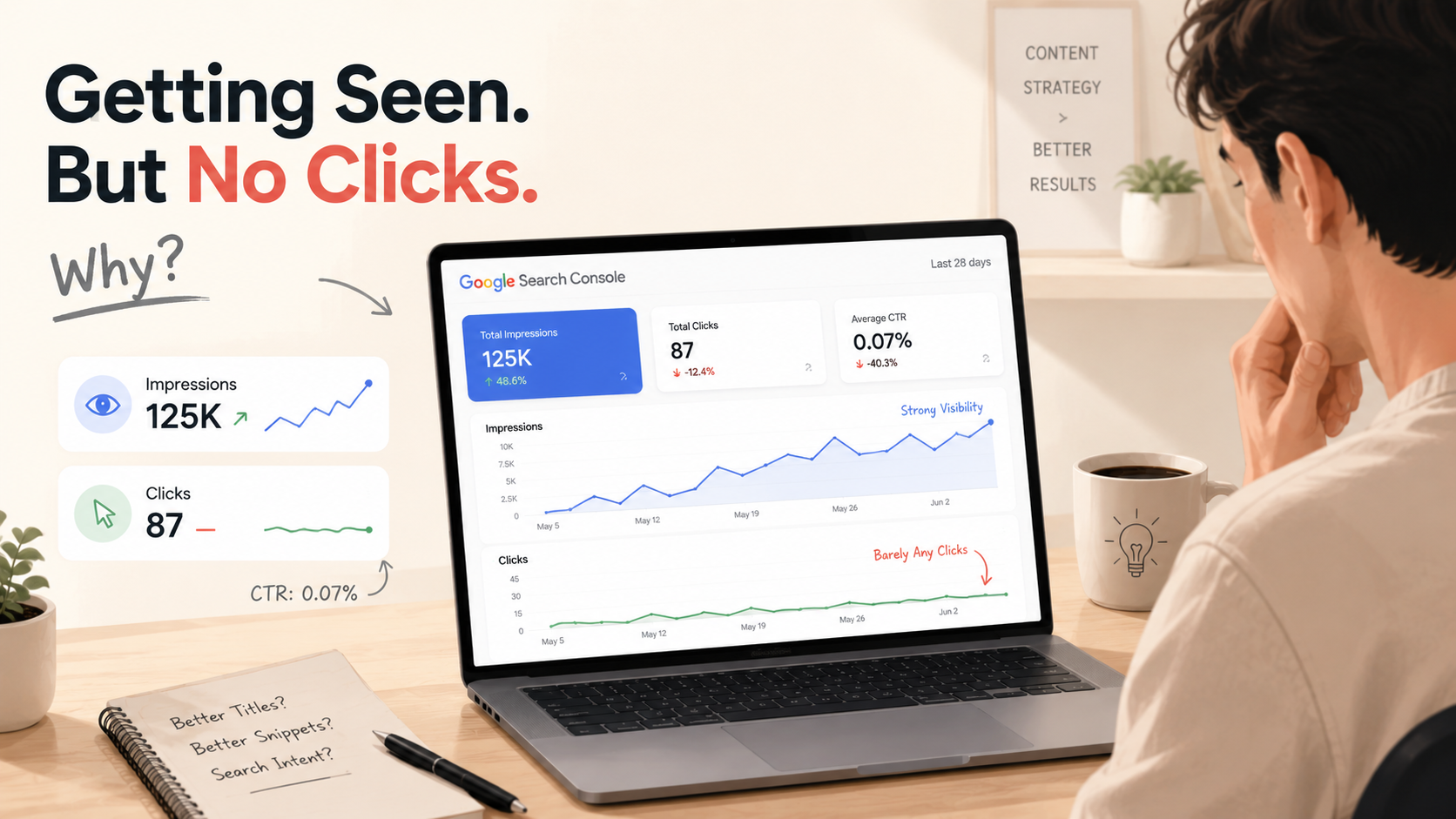
You open Google Search Console after a few weeks away.
Impressions are going up.
For a second, you feel hopeful okay, Google is finally noticing my content.
Then you look at the clicks column.
Zero. Two. One.
And suddenly the excitement disappears.
If Google is showing your blog posts in search results, why isn't anyone clicking?
This is one of the most common and most frustrating stages of early SEO. If you're dealing with blog impressions but no clicks, the good news is this: impressions mean Google already understands your content and has started testing it in search results.
Now the challenge shifts from visibility to getting people to click.
Let's break down why this happens and how to fix it.
What Impressions Actually Mean
An impression is counted whenever your page appears in a Google search result, even if nobody clicks it.
That means Google has:
- Indexed your page
- Understood the topic
- Decided your content is relevant enough to show for certain searches
That's already progress, especially for newer blogs.
Think of it like opening a small shop on a busy street. Impressions mean people are walking past your store. Clicks happen when someone decides your shop looks worth entering.
Right now, Google knows your content exists.
The next step is convincing people to choose your result over everyone else's.
Why Your Blog Posts Aren't Getting Clicks
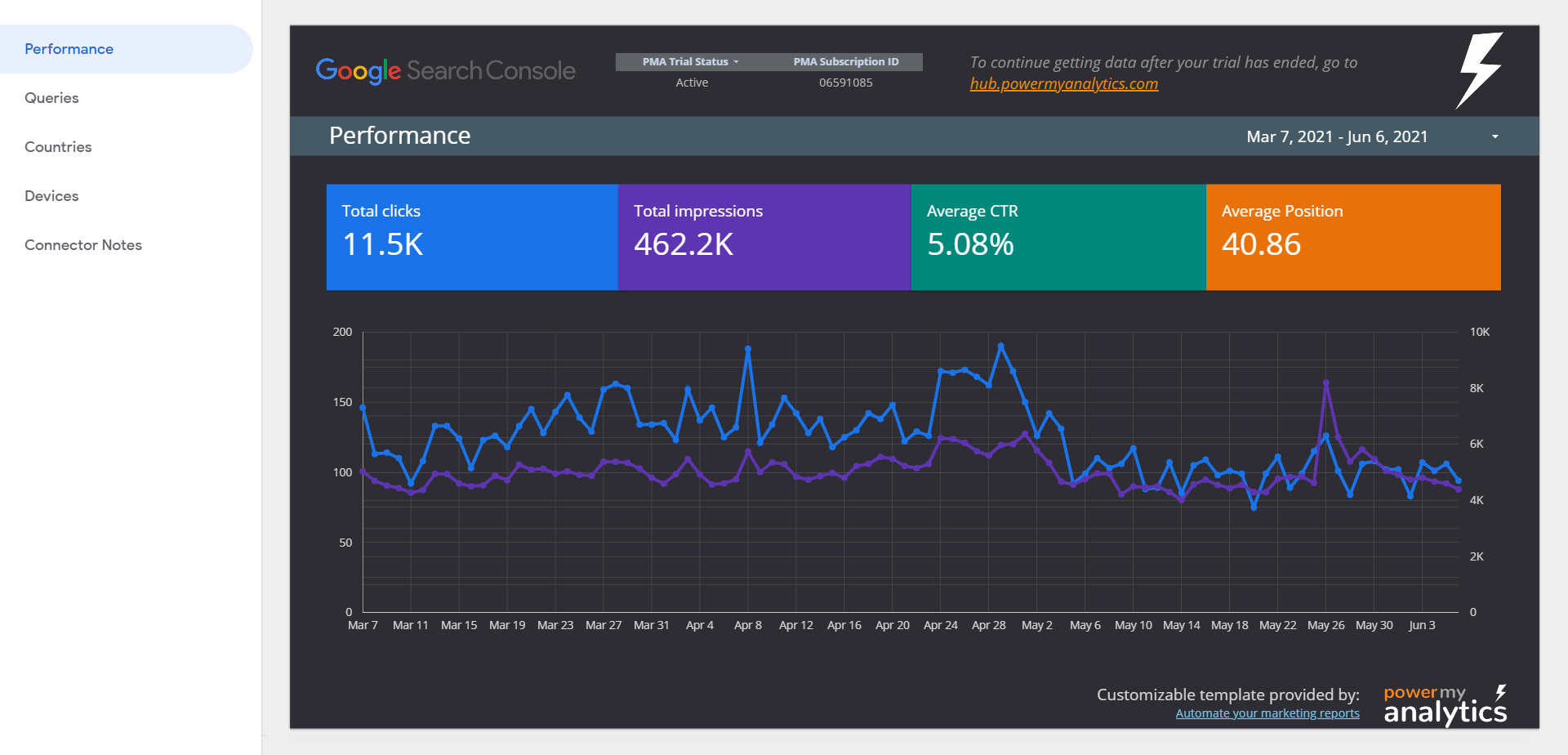
Usually, it's not one huge problem.
It's a few smaller issues quietly lowering your click-through rate (CTR).
Your Title Doesn't Stand Out
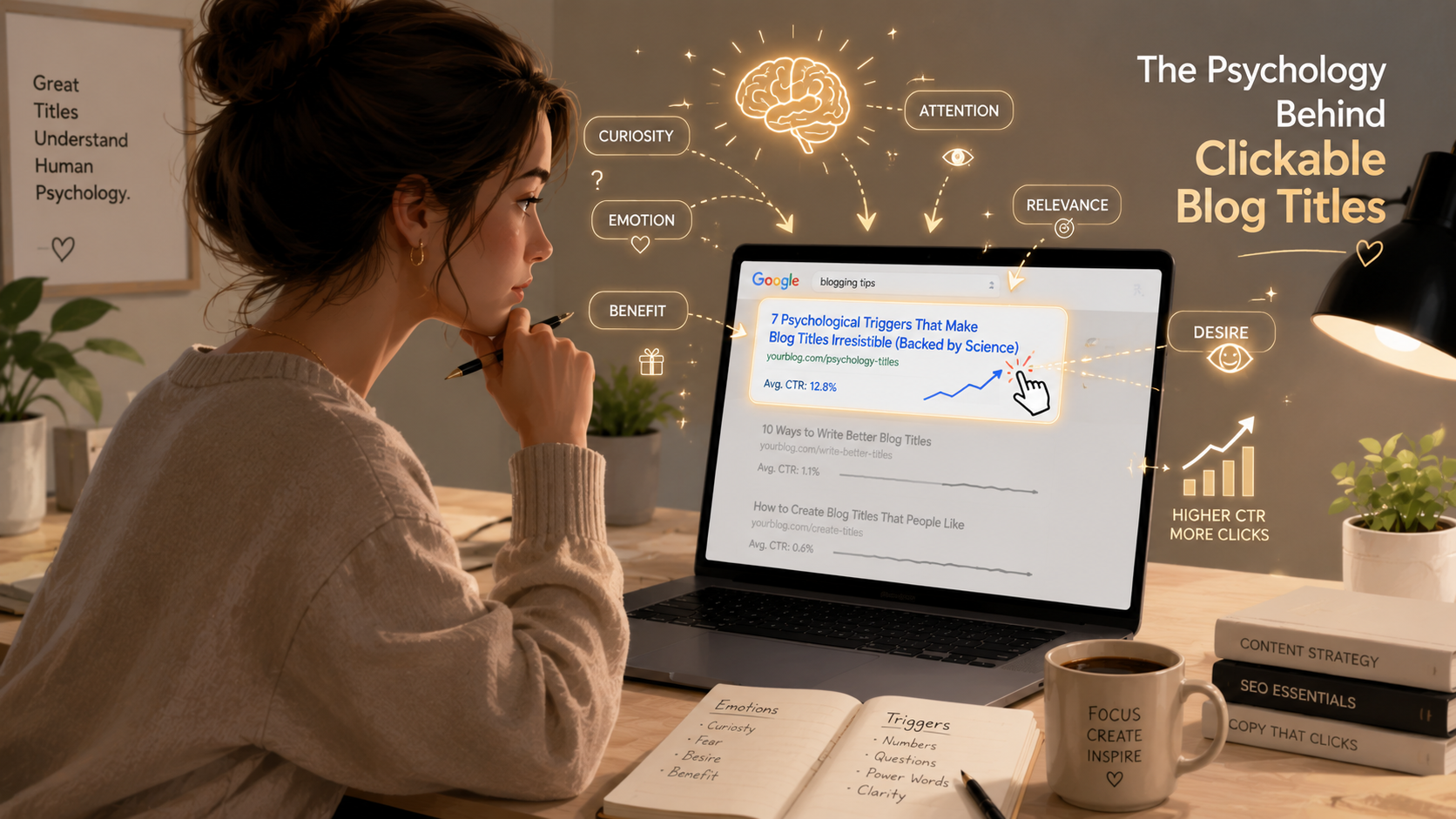
Your title does most of the work in search results.
A weak or generic title gets ignored even if the article itself is valuable.
Compare these:
- SEO Tips for Bloggers
- 7 SEO Mistakes Killing Your Blog Traffic
The second one feels more specific and outcome-driven. It immediately tells the reader what they'll learn.
People don't click because a title is optimized.
They click because it feels useful.
A simple rule:
vague titles get skipped, clear titles get clicked.
Before publishing, ask yourself:
"Would I genuinely choose this result over the others on the page?"
If not, rewrite the title.
Your Meta Description Feels Forgettable
Most users scan search results quickly.
Your meta description is your chance to explain:
- What the article covers
- Why it's helpful
- Why someone should click your result
Weak meta descriptions usually:
- Repeat the title
- Sound robotic
- Stuff in keywords unnaturally
Good ones sound natural and specific.
For example:
❌ Learn SEO tips for blogs and improve SEO performance today.
✅ Struggling with impressions but no clicks? Here's why people skip your blog posts and how to improve CTR step by step.
One sounds generic.
The other sounds relevant to a real problem.
You're Ranking Too Low
This is one of the biggest reasons for blog impressions but no clicks.
A page ranking at position 14 or 18 may still get impressions, but very few people scroll far enough to click it.
Most clicks happen in the top results on page one.
So impressions without clicks often means:
- Google understands your content
- But your rankings still need time and authority to improve
That's normal for newer websites.
Impressions are usually the first stage before stronger traffic arrives.
Your Content Doesn't Match Search Intent
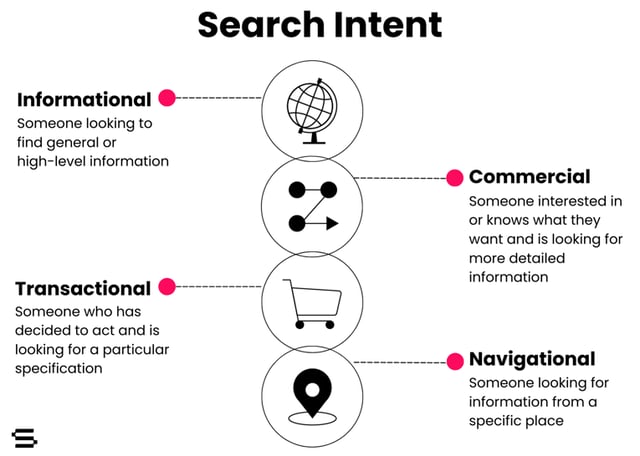
Search intent simply means:
what the searcher actually wants.
For example:
If someone searches:
- "best budget laptops for students"
they probably want:
- comparisons
- recommendations
- pricing breakdowns
- pros and cons
They do not want:
- a history of laptops
- broad generic advice
- filler paragraphs
Even if your keyword is technically correct, people won't click if your angle doesn't match what they're looking for.
https://climaxcreators.com/posts/search-intent-in-seo-match-content-to-what-users-want
Your Keyword Is Too Competitive
Broad keywords look attractive, but they're usually dominated by massive websites.
A newer blog targeting:
- SEO tips
is competing against sites with years of authority.
But targeting:
- SEO tips for student bloggers
- how to improve blog CTR
- SEO mistakes beginner bloggers make
gives you a much better chance to rank and attract clicks.
Long-tail keywords usually:
- have clearer intent
- face less competition
- attract more targeted readers
https://climaxcreators.com/posts/keyword-research-for-beginners-how-to-find-seo-keywords-free
Why Impressions Are Still a Good Sign
This stage feels frustrating, but it's completely normal.
Impressions mean:
- your pages are indexed
- Google understands your topic
- your content is entering real search results
That's the foundation SEO is built on.
Almost every blog that now gets steady traffic started with impressions and barely any clicks.
The difference is that successful blogs keep refining instead of quitting too early.
How to Improve Your Click-Through Rate
Here's where real improvement starts.
Rewrite Weak Titles
Open Google Search Console and find posts with:
- high impressions
- low CTR
These are opportunities hiding in plain sight.
Make titles:
- more specific
- easier to understand
- benefit-focused
- curiosity-driven without sounding clickbait
Even small title changes can improve CTR noticeably over time.
Improve Your Meta Descriptions
Think of your meta description as a one-line pitch.
Someone should instantly understand:
- what they'll learn
- why the article matters
- why your result is worth clicking
Write for humans first.
Study the Top Results
Search your target keyword manually.
Look closely at:
- the titles ranking above you
- the wording they use
- the angle they're taking
- what promise they're making
You don't need to copy them.
But you do need to understand what already earns clicks in your niche.
Match Search Intent Better
Sometimes the issue isn't rankings.
It's positioning.
Ask yourself honestly:
- Does this article fully solve the problem behind the keyword?
- Is the angle aligned with what people expect?
- Would someone feel satisfied after reading this?
If not, improve the article before worrying about more SEO tricks.
Build Topical Authority
Google trusts websites that consistently cover related topics well.
One random SEO article won't build authority.
But multiple connected posts about:
- keyword research
- search intent
- blog CTR
- internal linking
- beginner SEO mistakes
start creating a strong topical ecosystem.
That's where internal linking becomes powerful.
https://climaxcreators.com/posts/internal-linking-in-seo-a-simple-guide-for-bloggers
You can also monitor performance using:
https://search.google.com/search-console/about
And learn SEO fundamentals here:
https://developers.google.com/search/docs/fundamentals/seo-starter-guide
A Simple Example
Two blogs publish articles about growing an email list.
Blog A
Title: How to Grow an Email List
Blog B
Title: How to Get Your First 500 Email Subscribers Without Ads
Both rank similarly.
But Blog B gets more clicks because:
- the outcome is specific
- the audience is clearer
- the title feels more actionable
Same topic.
Different positioning.
And positioning often decides who gets the click.
Common CTR Mistakes Bloggers Make
A few things quietly hurt click-through rates:
- vague headlines
- keyword stuffing
- meta descriptions that repeat the title
- misleading clickbait titles
- targeting keywords that are far too broad
- ignoring search intent
- never studying competing search results
Small improvements in these areas can make a noticeable difference over time.
Quick CTR Checklist
Before publishing, ask yourself:
- Does the title clearly explain the benefit?
- Is the title specific enough to stand out?
- Does the meta description sound human?
- Does the article genuinely match search intent?
- Is the keyword realistically rankable for my blog size?
- Have I added internal links to related posts?
If you can answer yes to most of these, you're already ahead of many beginner bloggers.

You're Closer Than You Think
Impressions are not failure.
They're proof that Google has started recognizing your content.
Now the goal is improving:
- titles
- positioning
- search intent alignment
- topical authority
- rankings over time
That gap between impressions and clicks feels frustrating in the beginning, but it's part of normal SEO growth.
Google noticing your content is step one.
Convincing people to click is step two.
And both are learnable skills.
https://climaxcreators.com/posts/why-your-blog-is-not-ranking-on-google-and-how-to-fix-it
Frequently Asked Questions
Why do my blog posts get impressions but no clicks?
Usually because of low rankings, weak titles, poor search intent alignment, or generic meta descriptions. Google may understand your content, but searchers still need a reason to choose your result.
Are impressions good for SEO?
Yes. Impressions mean your content is indexed and appearing in search results. That's an important early SEO signal, especially for newer blogs.
Does changing titles improve CTR?
Absolutely. A stronger, clearer title can noticeably improve click-through rate especially for posts already getting impressions but very few clicks.
What is a good CTR in Google Search?
It depends heavily on ranking position. Pages ranking in the top 3 usually get much higher CTR compared to lower positions on page one or page two.
How long does it take for clicks to increase?
SEO is gradual. Most blogs first see impressions, then occasional clicks, and eventually stronger traffic as rankings improve and authority builds over time.