Travel looks easy online.
Someone posts a perfect airport photo, a clean hotel balcony somewhere in Italy, maybe a laptop near the beach pretending they worked for exactly six minutes that day, and suddenly it feels like everybody else naturally knows how to travel well.
Most people don't.
Especially the first time.
Your first real trip usually involves some combination of overpacking, unnecessary stress, bad airport decisions, spending too much money too early, and realising halfway through that nobody actually explained how any of this works.
Which is fine. That's part of it.
But there are also a few travel hacks for first time travelers that genuinely make the experience smoother. Not fake internet hacks like “roll your clothes into tiny burritos and suddenly become spiritually organised.” Real things. Practical things. The kind that actually reduce stress when you're standing in an airport at 2 AM wondering why your gate changed three times in twenty minutes.
Here are the ones worth knowing before your first trip.
1. Pack Less Than You Think You Need
This is probably the advice people ignore most aggressively.
Everyone thinks they'll be the exception.
You won't.
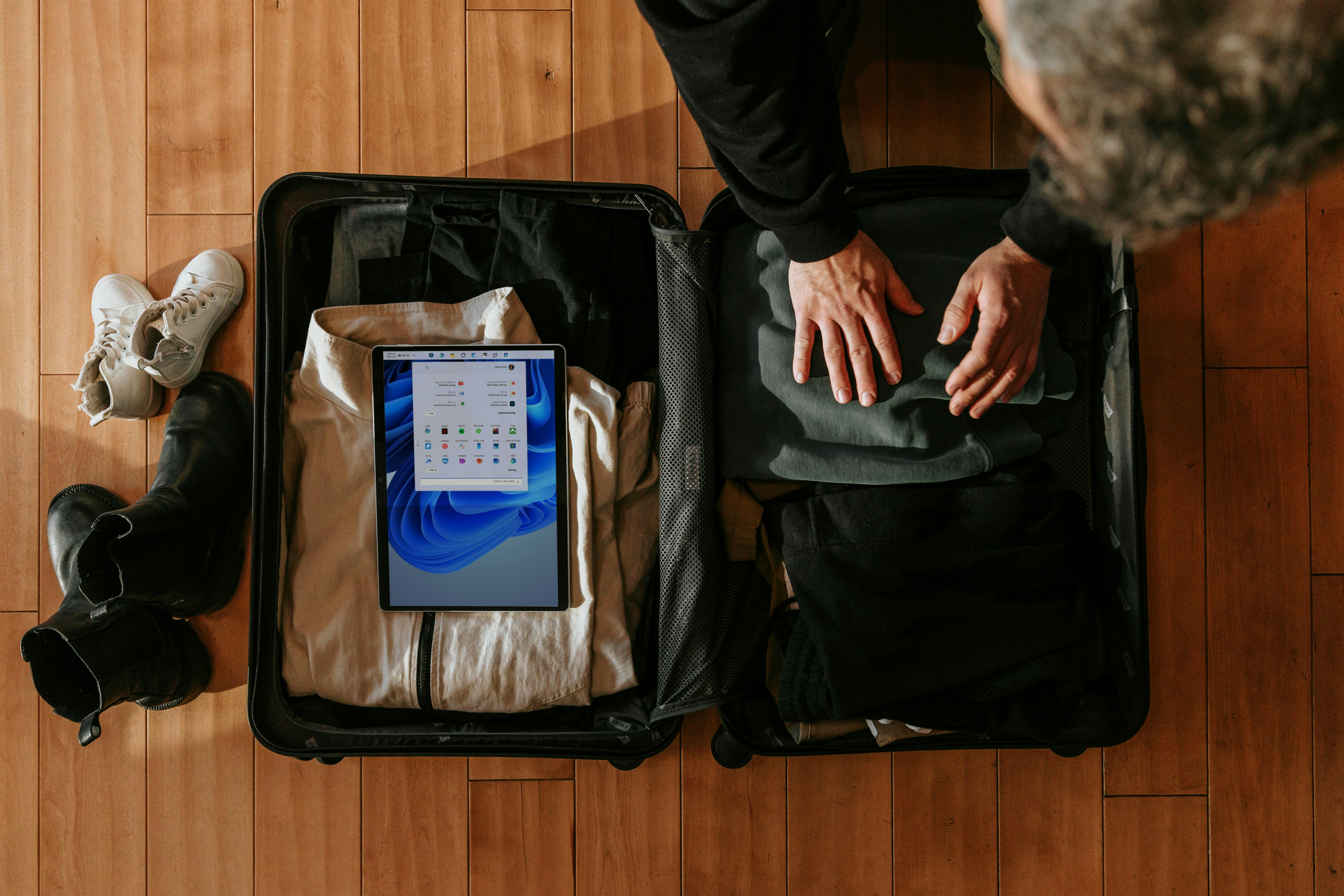
The first trip usually starts with panic packing. Extra shoes. Backup outfits. Three different chargers you never touch. Clothes for imaginary situations that never happen. Something slightly formal “just in case,” despite having absolutely no plans requiring formalwear.
Then you drag all of it through train stations for two weeks.
Packing light tips sound boring until you're carrying your own luggage up four flights of stairs in a building without an elevator somewhere in Lisbon.
Here's the easier rule:
If you can wear something multiple times, bring it.
If you “might” need it, you probably won't.
If it's heavy, it should earn its place immediately.
The best beginner travel advice is honestly this: nobody remembers your outfits except you.
Comfort matters more.
2. Arrive at the Airport Earlier Than You Think Necessary
Experienced travelers love acting casual about airports.
First-time travelers shouldn't copy them.
Airport hacks for beginners are usually less about speed and more about reducing panic. Arriving early changes the entire energy of the trip. You stop rushing. You stop making mistakes. You stop sweating through security while trying to unzip your backpack one-handed.
For international trips, aim for at least three hours early the first time.
Yes, it feels excessive.
Until security lines suddenly explode for no obvious reason and you're deeply grateful you listened.
Also:
- Download your boarding pass beforehand
- Keep passport and documents in one consistent place
- Wear shoes that come off easily
- Bring a water bottle you can refill after security
Tiny things. Huge difference.
3. Your First Day Should Be Intentionally Slow
One of the biggest first-time traveler mistakes is overplanning Day One.
You land exhausted, slightly disoriented, maybe jet lagged, and immediately try to “make the most” of the destination.
Bad idea.
The first day should mostly be about settling in.
Walk around slowly. Find coffee. Learn the neighborhood. Figure out transport without pressure. Let your brain catch up to the fact you're suddenly in another country.
This matters more than people realise.
Travel becomes overwhelming fast when every moment feels scheduled.
Some of the best travel hacks that actually work are honestly just giving yourself permission to slow down early. Which is also why this piece on meaningful travel on a two week holiday resonates with so many first-time travelers.
Especially if you're traveling alone.
4. Don’t Book Every Minute Before You Arrive
The internet makes travel feel like a competitive productivity challenge.
Every attraction. Every restaurant. Every hidden gem. Every rooftop bar somebody online described as “life-changing” despite it mostly being expensive cocktails and good lighting.
Leave room for randomness.
Seriously.
Some of the best travel experiences happen accidentally because you weren't rushing to the next reservation.
A café you found while lost. A local recommendation. A street you wandered into because you had time.
Overplanning removes discovery from the trip entirely.
And honestly, discovery is the whole point.
5. Learn Basic Local Etiquette Before You Go
This gets overlooked constantly.
People spend hours researching aesthetic places to visit and almost no time learning how to exist politely in them.
You don't need fluency. Nobody expects that.
But knowing basic etiquette changes how you experience a place.
Learn:
- basic greetings
- how tipping works
- public transport etiquette
- dining customs
- local phrases like “thank you” and “excuse me”
It shows respect. And practically speaking, people become noticeably warmer when they see you're trying.
This is especially important when thinking about how to prepare for your first trip abroad.
Confidence comes faster when you understand the social basics.
6. Travel Insurance Feels Unnecessary Until It Isn’t
Nobody enjoys buying travel insurance.
It feels boring and slightly pessimistic.
Then someone loses luggage or misses a flight or gets sick abroad and suddenly it becomes the smartest purchase of the entire trip.
Travel insurance first trip advice is simple:
Get it before you leave.
Not the cheapest possible option either. Read what it actually covers.
You probably won't need it.
That's ideal.
Still worth having.
7. Stop Trying to See Everything
This one takes people years to learn.
The fastest way to ruin a trip is trying to optimise it too aggressively.
Three cities in five days sounds exciting until you're exhausted, overstimulated, and barely remember where anything happened.
First-time travelers especially underestimate how tiring constant movement becomes.
Stay longer in fewer places.
You experience more that way, not less.
There's also less pressure to constantly “perform” the trip correctly.
Which helps.
A lot.
8. Tourist Traps Usually Feel Like Tourist Traps
People overcomplicate this.
If a restaurant has giant menu boards with photos of every dish in six languages directly beside a famous landmark, there's a good chance the food will be terrible.
Avoiding tourist traps doesn't require becoming a travel genius overnight.
Usually you just need to walk five minutes further away from the obvious area.
That's it.
The prices improve. The atmosphere improves. The experience improves.
And honestly, some tourist spots are still worth seeing. Completely fine. Just don't spend the entire trip trapped inside the most crowded part of every city.
9. Saving Money While Traveling Starts Before the Trip
Budget problems usually begin before the plane even leaves.
People spend too much too quickly because they panic-book everything last minute.
Flights. Hotels. Airport food. Currency exchange counters with terrible rates because they didn't prepare earlier.
Saving money while traveling mostly comes down to small decisions repeated consistently.
Book flights earlier.
Use public transport.
Avoid eating directly beside major attractions.
Walk when possible.
Carry snacks on travel days.
None of this sounds glamorous.
It works anyway.
10. Your First Trip Will Probably Go Wrong Somewhere
And honestly, that's normal.
Missed trains happen. Bad hotels happen. Rain happens. You will eventually get lost somewhere while pretending you absolutely know where you're going.
Part of becoming comfortable with travel is realising small problems are rarely actual disasters.
They're just stories that haven't become funny yet.
The people who travel confidently are not people who avoid mistakes completely.
They're people who stopped panicking every time something unexpected happened.
That shift matters more than any packing hack ever will.
Final Thoughts
The best travel hacks for first time travelers are usually the least glamorous ones.
Pack lighter. Slow down. Arrive early. Leave room for mistakes. Stop trying to optimise every second of the experience.
Travel gets easier once you stop expecting yourself to do it perfectly.
Because nobody does.
Not really.
Even experienced travelers are mostly improvising half the time. They've just become calmer about it.
Honestly, reading practical guides like these travel tips for beginners before your first trip helps more than most people expect.