Introduction
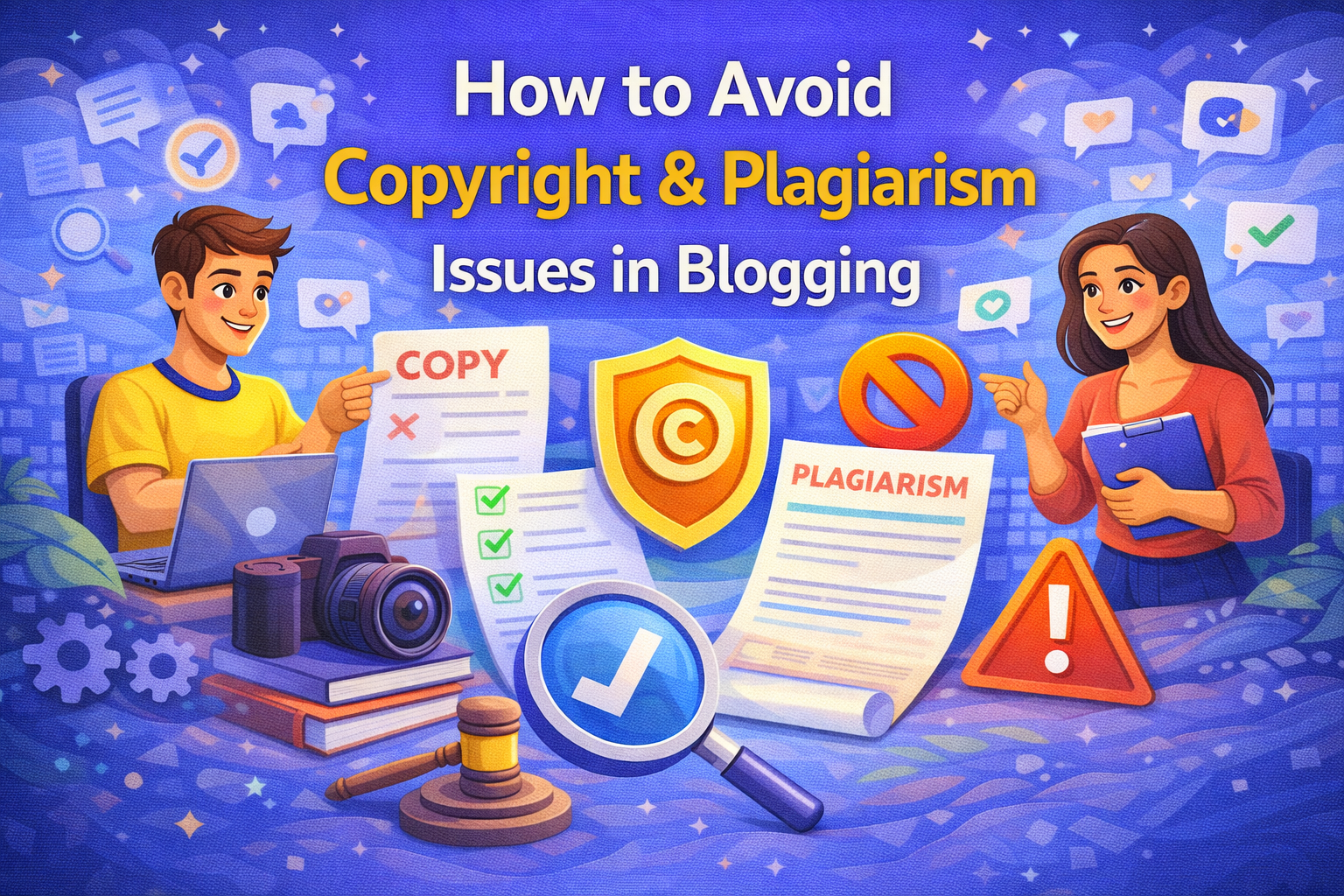
Blogging is one of the best ways to share knowledge, build authority, and grow an audience—but only if it’s done the right way. Copyright and plagiarism issues are among the most common mistakes new bloggers make, often without realizing it.
In this guide, we’ll explain what copyright and plagiarism really mean, why they matter, and practical steps every blogger can follow to stay safe while creating original, high-quality content.
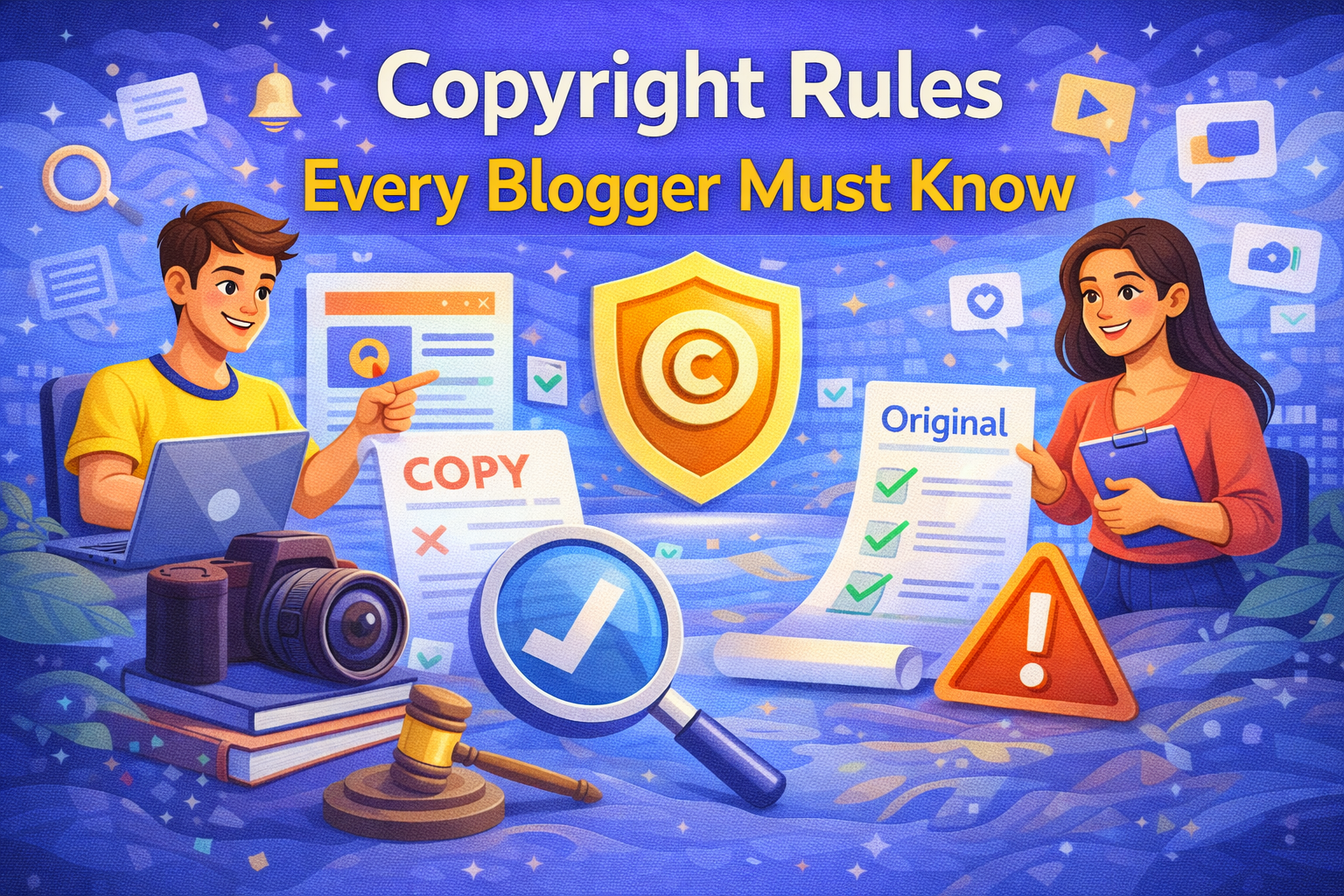
What Is Copyright in Blogging?
Copyright is a legal protection given to original content, including blog posts, images, videos, graphics, and even code. The moment someone creates original content, they automatically own the rights to it.
This means:
- You cannot copy someone else’s content
- You cannot reuse images without permission
- You cannot publish modified content and claim it as yours
Even if the content is available publicly on Google, it does not mean it’s free to use.
What Is Plagiarism?
Plagiarism happens when you:
- Copy content word-by-word
- Rewrite someone’s content with minor changes
- Use ideas or structure without giving credit
Plagiarism is not just unethical—it can also:
- Get your blog removed
- Cause copyright complaints
- Lead to account suspension on blogging platforms
- Affect AdSense approval and SEO rankings
Why Bloggers Must Avoid Copyright & Plagiarism
Avoiding copyright and plagiarism is important because:
- ✅ Protects your blog from legal trouble
- ✅ Builds trust with readers
- ✅ Improves SEO and search rankings
- ✅ Helps with AdSense and monetization approval
- ✅ Keeps your blogging account safe
Platforms like Climax Creators strictly promote original, creator-owned content to maintain a healthy ecosystem.
Common Mistakes Bloggers Make
Many beginners make these mistakes unknowingly:
- Copying content from other blogs
- Using Google images without checking licenses
- Paraphrasing articles too closely
- Using AI-generated content without editing
- Copy-pasting definitions from Wikipedia
Avoiding these small mistakes can save you from big problems later.
How to Avoid Copyright & Plagiarism Issues
1. Always Write Original Content
Write in your own words, based on your understanding or experience. Research is fine—but copying is not.
Tip: Read multiple sources, close them, then write from memory.
2. Use Proper References (When Needed)
If you quote:
- Statistics
- Research
- Expert opinions
Always mention the source clearly.
Example:
According to a recent study by XYZ Research…
3. Avoid Copy-Paste From AI Tools
AI tools can help with ideas, but:
- Never publish raw AI content
- Always rewrite, personalize, and humanize it
- Add your own examples and explanations
Your content should feel human-written, not machine-generated.
4. Use Copyright-Free Images
Only use:
- Your own images
- Free stock images (with license)
- Images with proper attribution
Trusted sources include:
- Unsplash
- Pexels
- Pixabay
Never download images randomly from Google.
5. Understand Fair Use (Carefully)
Fair use allows limited use of copyrighted content for:
- Education
- Commentary
- Reviews
But fair use is not guaranteed protection. When in doubt, avoid using copyrighted material.
6. Check Content Before Publishing
Before publishing:
- Read your blog again
- Remove copied phrases
- Ensure originality
- Use plagiarism-checking tools if needed
Even 90–95% originality is not enough—aim for 100% original value.
How Climax Creators Helps Bloggers Stay Safe
Climax Creators is built with creator safety in mind:
- Clear content guidelines
- Focus on original writing
- Community reporting system
- Monetization-friendly policies
- AdSense-safe environment
As long as you follow ethical blogging practices, your content remains protected and respected.
Final Thoughts
Avoiding copyright and plagiarism is not hard—it just requires awareness and honesty. Blogging is a long-term game, and original content is the only sustainable way to grow.
If you want to build a trustworthy blog, attract readers, and monetize safely, always create content you truly own.