Introduction
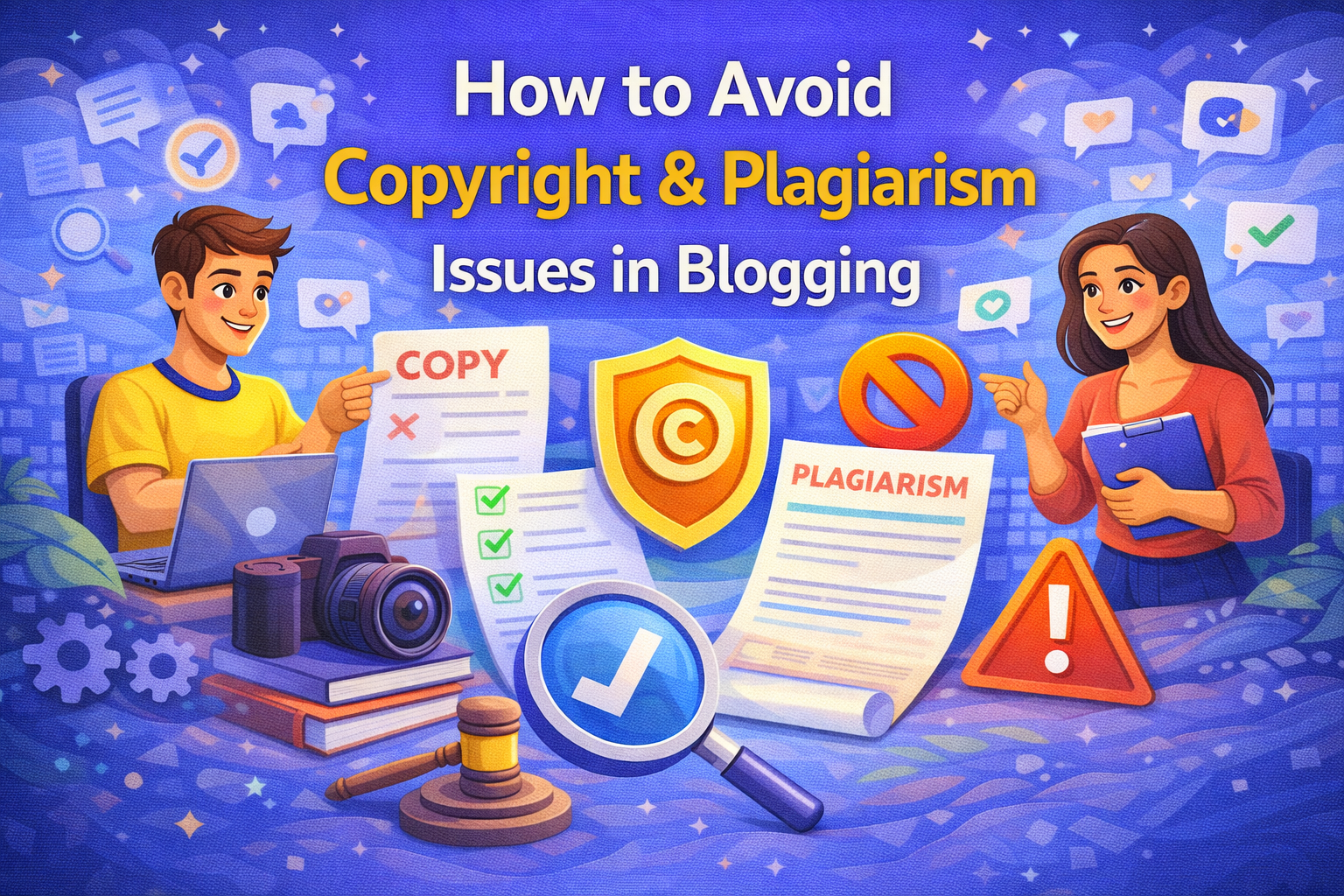
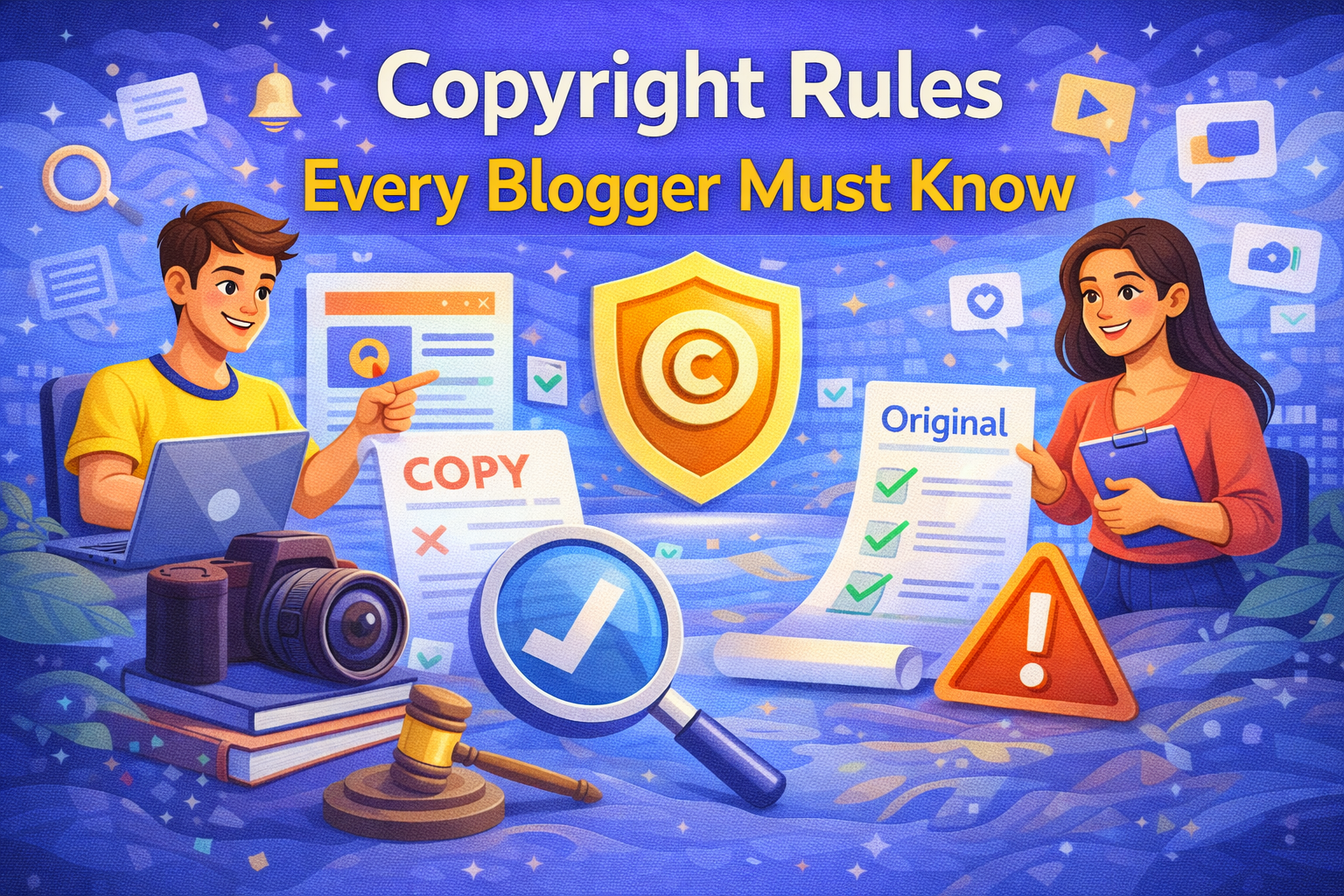
Copyright is one of the most misunderstood topics in blogging. Many bloggers unknowingly break copyright rules, which can lead to content removal, legal trouble, or account suspension. That’s why understanding copyright rules for bloggers is essential—especially if you want to build a long-term and trustworthy blogging career.
This guide explains copyright rules in simple terms so every blogger can publish content safely and confidently.
What Is Copyright in Blogging?
Copyright is a legal right that protects original work. In blogging, copyright applies to:
- Written content
- Images and graphics
- Videos
- Audio files
- Designs and layouts
The moment you create original content, it is automatically protected by copyright.
Who Owns Blog Content?
If you write original content:
- You are the copyright owner
- Your content belongs to you
- No one can copy or reuse it without permission
On platforms like Climax Creators, creators retain ownership of their content, but they are also responsible for ensuring it does not violate others’ rights.
Copyright Rules Every Blogger Should Follow
1. Never Copy Content From Other Websites
Copying content from blogs, books, or articles—even with small changes—is not allowed.
Avoid:
- Copy-paste articles
- Spun or rewritten content
- Translated content without permission
Always create original content in your own words.
2. Images Are Also Copyrighted
Many bloggers make the mistake of copying images from Google.
You must NOT:
- Use images from Google search directly
- Reuse copyrighted photos without permission
Instead, use:
- Your own images
- Royalty-free image websites
- Images with proper licenses
Always check image usage rights before uploading.
3. Understand Fair Use (Don’t Misuse It)
Fair use allows limited use of copyrighted material for:
- Education
- Commentary
- Review or criticism
However, fair use does not mean:
- Copying full articles
- Using copyrighted images freely
- Republishing content with minor edits
Fair use must be minimal and justified.
4. Give Credit (But Know Its Limits)
Giving credit does not always make content legal.
Important to know:
- Credit does NOT replace permission
- “Source mentioned” does not mean copyright-free
- Permission or proper licensing is still required
Always get permission if the content is not yours.
5. AI Content Still Has Copyright Responsibility
Using AI tools does not remove responsibility.
As a blogger, you must:
- Review AI-generated content
- Ensure originality
- Avoid reproducing copyrighted material
You are responsible for what you publish—even if AI helped create it.
6. Don’t Reuse Your Own Published Content Carelessly
If you publish the same content on multiple platforms:
- Check platform policies
- Avoid duplicate content issues
- Clearly reference original sources if needed
Some platforms may restrict duplicate publishing.
7. Respect Copyright in Videos & Media
If you embed or use:
- Videos
- Music
- Podcasts
Make sure:
- You have rights to use them
- You are embedding legally (not downloading and re-uploading)
Unauthorized use can lead to takedowns.
What Happens If Copyright Rules Are Violated?
Violating copyright rules can result in:
- Content removal
- Copyright strikes
- Account suspension
- Legal notices in serious cases
This is why prevention is always better than fixing problems later.
How to Stay Safe as a Blogger
Follow these simple practices:
- Write original content
- Use licensed or self-created media
- Double-check sources
- Avoid shortcuts
- When in doubt, don’t publish
Being careful saves time, effort, and stress.
Why Copyright Awareness Helps Bloggers Grow
Respecting copyright:
- Builds trust with readers
- Protects your creator account
- Makes your content advertiser-friendly
- Supports long-term growth
Professional bloggers take copyright seriously.
Final Thoughts
Understanding copyright rules for bloggers is not optional—it’s essential. Whether you are a beginner or an experienced creator, following copyright laws protects your work and your reputation.
If you focus on originality, honesty, and responsible content creation, you will never have to worry about copyright issues.