


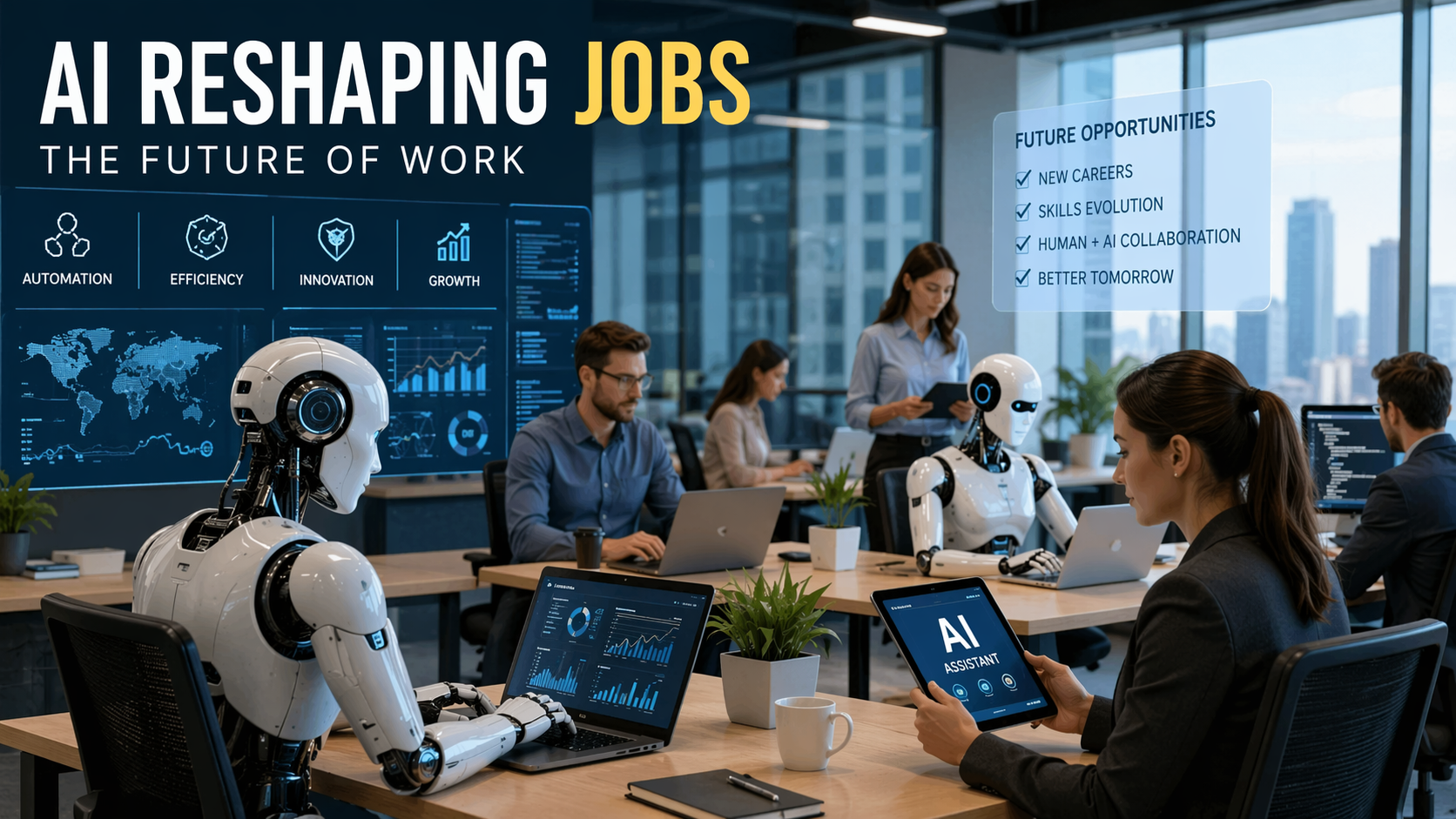
Artificial intelligence is no longer something we only discuss as a future trend. It is already changing how people work today. From chatbots handling customer support to smart tools helping doctors review reports, AI has become part of daily business operations.
This shift has created both excitement and concern. Some people worry about losing jobs, while others see new opportunities for growth.
The truth is more balanced than extreme headlines suggest. AI is not simply replacing workers. It is changing job roles, improving productivity, and creating demand for new skills. AI reshaping jobs means employees now need to work alongside technology instead of competing with it.
In this article, we explore how AI is changing industries, real-world examples, future skills, and how workers can prepare for long-term success.
What Does AI Reshaping Jobs Mean?
When we say AI reshaping jobs, we mean many tasks that once required manual effort are now supported by smart software.
AI can:
- Sort data quickly
- Answer common questions
- Create reports
- Identify patterns
- Improve decision-making
This allows employees to focus on work that requires creativity, judgment, communication, and problem-solving.
For example:
- Recruiters use AI to filter resumes faster
- Marketers use AI to study customer trends
- Teachers use AI to personalize lessons
- Accountants use AI for faster reporting
- Doctors use AI to support diagnosis
The job still exists, but the way it is done is changing.
Real-Life Example 1: AI in Customer Service
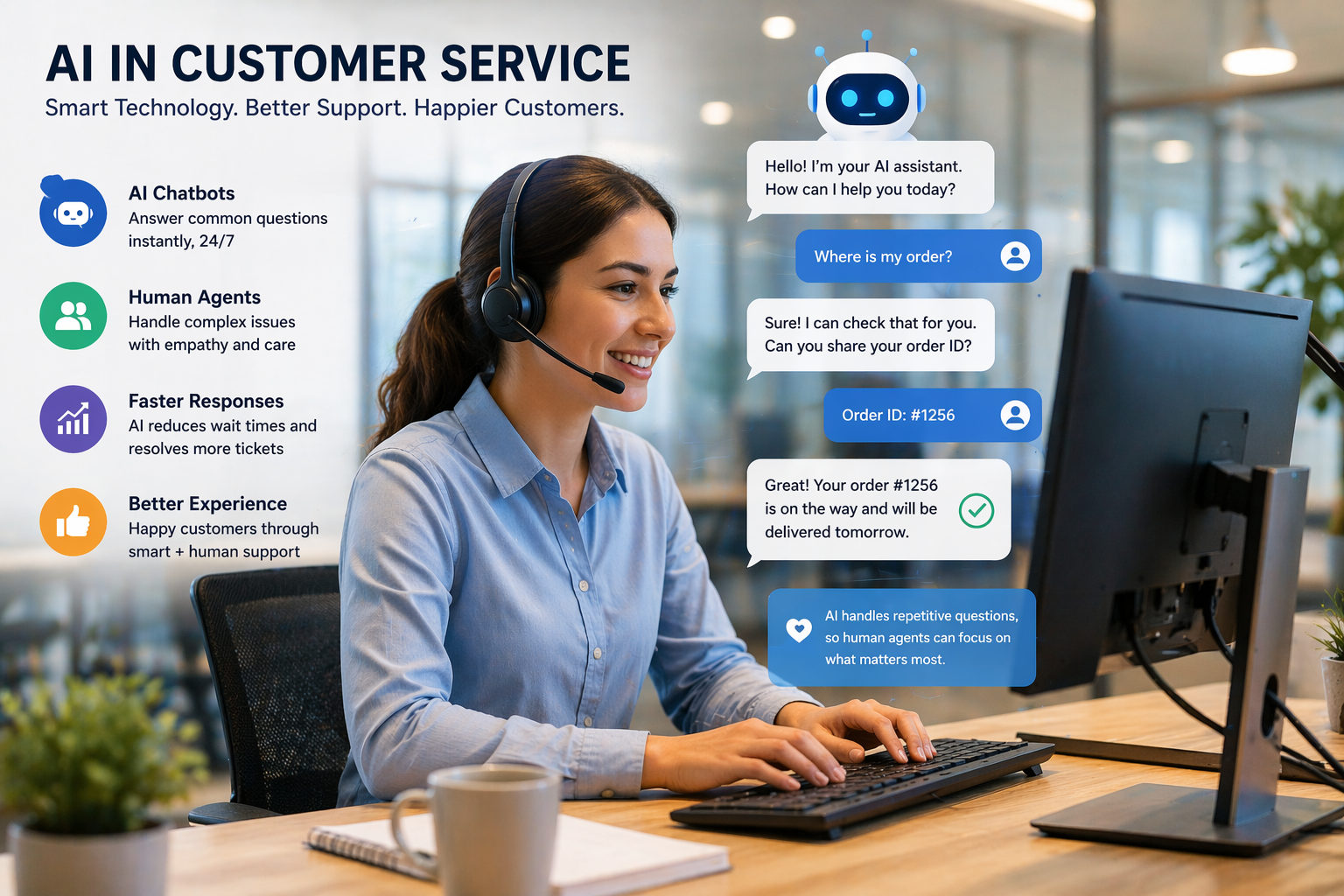
Many businesses now use AI chatbots to answer common questions such as order status, refunds, or account issues. This reduces customer waiting time and helps support teams work more efficiently.
However, when a customer is upset or has a complex issue, human agents are still more effective. People understand emotions, tone, and unique situations better than machines.
A strong example is Amazon, which uses AI across recommendations, customer service, and logistics to improve customer experience.
This shows that AI handles repetitive tasks, while humans handle relationships.
Real-Life Example 2: AI in Healthcare
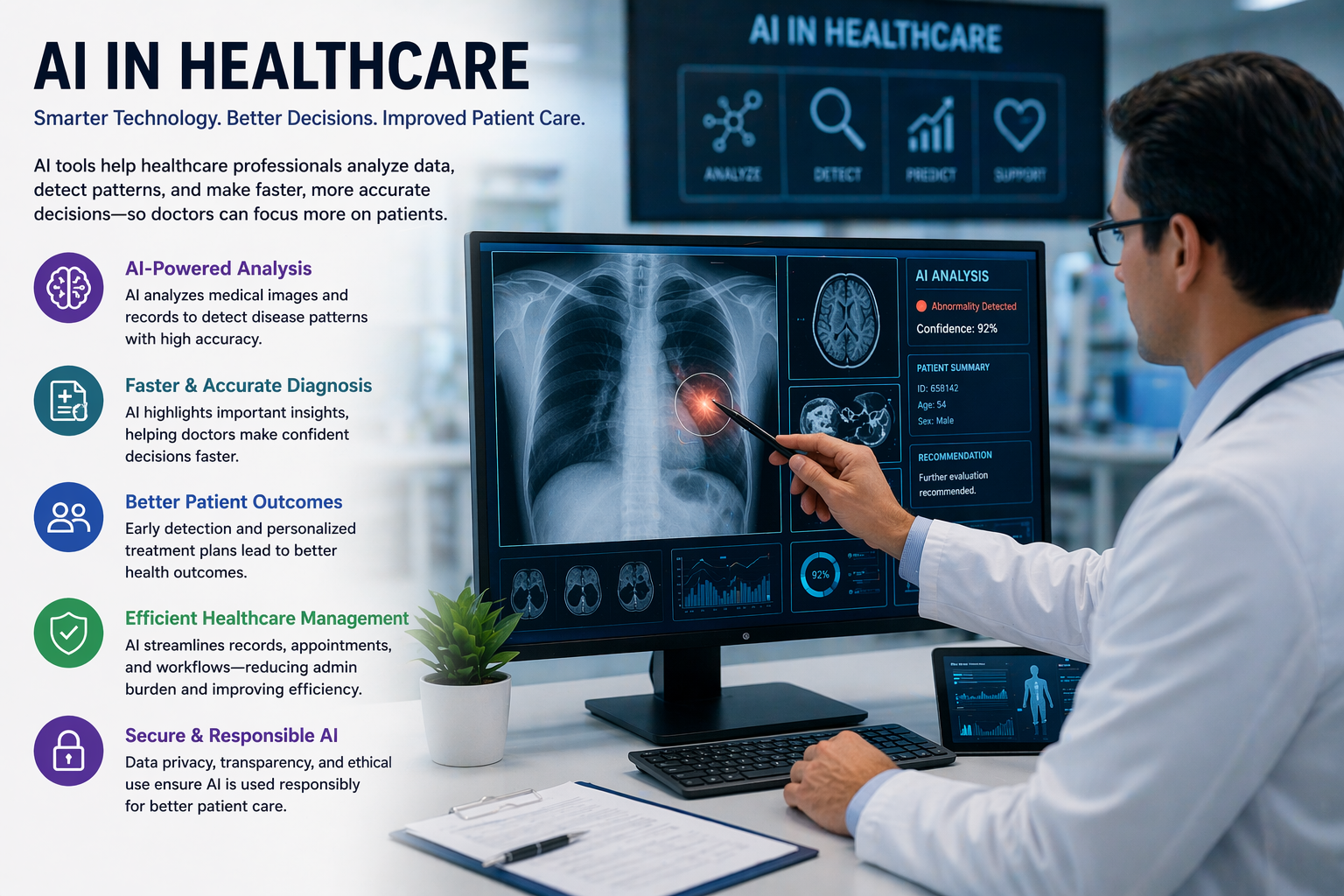
Healthcare is another industry where AI is creating real value. Hospitals use AI tools to analyze scans, detect disease patterns, and manage records.
According to the World Health Organization, digital health technologies can improve access, efficiency, and patient care when used responsibly.
Read more: https://www.who.int/health-topics/digital-health
Doctors are not replaced. Instead, AI helps them make faster decisions and spend more time caring for patients.
Industries Where AI Is Changing Jobs Fastest
1. Finance
Banks use AI for fraud detection, risk analysis, and customer support. Employees can focus more on strategy and service.
2. Retail
Retail companies use AI for stock planning, product recommendations, and understanding customer buying behavior.
3. Education
Teachers use AI tools for grading support, lesson planning, and progress tracking.
4. Marketing
Marketers use AI for keyword research, ad targeting, and content planning.
5. Manufacturing
Factories use robotics and predictive maintenance systems to increase efficiency and reduce downtime.
Jobs Most Likely to Change
Some repetitive jobs may reduce over time, such as:
- Basic data entry
- Manual scheduling
- Routine bookkeeping
- Repetitive customer support
- Standard report creation
But many workers can move into higher-value roles through upskilling.
New Careers Created by AI
AI is also creating fast-growing job opportunities, including:
- AI Specialist
- Prompt Engineer
- Data Analyst
- Machine Learning Engineer
- Automation Consultant
- AI Product Manager
- AI Ethics Advisor
These careers are expected to grow as more companies adopt AI.
Skills Needed for the Future of Work
To stay relevant, workers should build both technical and human skills.
Technical Skills
- AI tool usage
- Data analysis
- Digital marketing
- Workflow automation
- Basic coding
Human Skills
- Communication
- Leadership
- Creativity
- Emotional intelligence
- Critical thinking
- Adaptability
Technology changes quickly, but human qualities remain valuable.
Challenges of AI Reshaping Jobs
AI offers many benefits, but it also creates challenges:
- Privacy concerns
- Bias in automated systems
- Overdependence on tools
- Job displacement in some sectors
- Skill gaps among workers
According to OECD, responsible AI should focus on fairness, transparency, and accountability.
Read more: https://oecd.ai/en/ai-principles
This is why responsible AI adoption matters.
How Workers Can Prepare
Keep Learning
Take online courses, certifications, or workshops regularly.
Use AI Tools
Instead of avoiding AI, learn how it can support your daily work.
Strengthen Human Skills
Communication, leadership, and creativity will remain valuable.
Stay Adaptable
The people who adapt fastest often grow fastest.
Final Thoughts
AI reshaping jobs is one of the biggest workplace changes of our time. It is changing how tasks are completed, what skills employers need, and how careers develop.
The biggest risk is not AI itself. The real risk is refusing to learn and adapt. Workers who stay curious, improve their skills, and use technology wisely will remain in demand.
The future of work will not belong only to machines. It will belong to people who know how to work with them.
Resources
- World Health Organization (WHO): https://www.who.int/health-topics/digital-health
- OECD AI Principles: https://oecd.ai/en/ai-principles